


President Prabowo Subianto suddenly spoke about house roofs at an official state forum. In the middle of the 2026 National Coordination Meeting of Central and Regional Governments in Sentul, Bogor, he brought up zinc roofing—hot, rusty, and, in his view, not reflective of an Indonesia that is “safe, healthy, clean, and beautiful.” Indonesia must be ASRI, he said. And one way to achieve that is by replacing zinc roofs with clay tiles.
At first glance, this sounds technical, even reasonable. Zinc does absorb heat quickly. In many dense neighborhoods, zinc roofs turn midday into an oven. Clay tiles are thicker, cooler, and visually more “orderly.” The President even framed it in terms of aesthetics: how can Indonesia look beautiful if its rooftops are rusty and shabby?
Then the question slowly emerges: should the matter of household roofs really be regulated by the president?
The answer may not be as simple as zinc versus tile. Because in that speech, there was one detail that shifted the entire direction of the conversation. The tiles in question would no longer be made purely of clay. They would be mixed with coal waste, fly ash and bottom ash (FABA), the residue of coal-fired power plants.
At that moment, what seemed like an aesthetic proposal became an energy issue.
From Zinc to FABA: Innovation or Waste Diversification?
Indonesia produces FABA in enormous quantities. The Ministry of Environment estimates that FABA production from coal-fired power plants could reach 12.6 to 25.2 million tons in 2025. This aligns with national coal demand, which stands at around 252 million tons for both electricity and non-electricity sectors.
Data from the national waste reporting system (SPEED) shows that nearly 2 million tons of fly ash and 336 thousand tons of bottom ash were recorded in 2025 alone. In several provinces—Aceh, Bengkulu, South Kalimantan, Bangka Belitung, Gorontalo, and parts of Sulawesi—this waste has not been optimally managed, and in some cases, not managed at all.
The problem is simple: FABA only exists if coal power plants keep operating.
The more coal-based electricity we produce, the more waste we generate. Once that waste becomes raw material for new industries—roof tiles, paving blocks, concrete—the sustainability of those derivative industries depends on the continued operation of coal-fired power plants.
This is where the concept of carbon lock-in becomes relevant: when infrastructure and economic chains make fossil fuel systems increasingly difficult to phase out because too many interests depend on them.
From Hazardous Waste to Building Material
Various studies have noted that FABA can contaminate soil and water bodies if storage facilities fail to meet proper standards. In many areas, piles of this waste have already triggered complaints from local residents.
Before regulatory revisions under the Job Creation Law, FABA was categorized as hazardous and toxic waste (B3). It is rich in silica and alumina, but it can also contain heavy metals such as arsenic, mercury, and lead.
Some Toxicity Characteristic Leaching Procedure (TCLP) tests indicate that certain FABA samples meet safety thresholds. Technically, several studies suggest that coal ash can strengthen construction materials if managed properly.
But “managed properly” is not a simple phrase.
Heavy metals do not always cause immediate acute poisoning. The risks are often long-term: soil contamination, leaching into groundwater, chronic exposure through dust. In a weak oversight system, the risk may shift, from the site of coal power plants to small-scale tile production centers in rural areas.
Long-term exposure to heavy metals is associated with:
- Neurological disorders
- Kidney damage
- Skin and respiratory irritation
- Increased cancer risk
In other words, the utilization of FABA depends heavily on strict and consistent technical supervision. The challenge is whether such standards can realistically be enforced down to the level of small and medium enterprises and village cooperatives.
Who Will Execute It? Koperasi Desa Merah Putih
And here lies the paradox.
The program is said to be driven by Koperasi Desa Merah Putih, a flagship initiative that previously handled LPG and fertilizer distribution. It will now venture into producing FABA-based roof tiles. The budget is estimated at under Rp1 trillion, drawn from the state reserve fund. On a national scale, that may appear small. But its implications are not.
Replacing zinc with tiles is not like swapping a phone case. Zinc is light and inexpensive. Tiles are heavy, requiring stronger wooden or steel frames and specific roof angles. This means many houses, especially modest ones, would need structural overhauls.
This is not merely a material substitution. It is a reconstruction project.
Meanwhile, many homes in disaster-affected areas remain damaged. Access to clean water is still limited in numerous regions. Proper sanitation is far from universal. Some schools still have leaking roofs. It is reasonable, then, to ask: among these urgent needs, is roof “gentengisasi” truly the top priority?
The government may argue that other countries regulate rooftops. That is true.
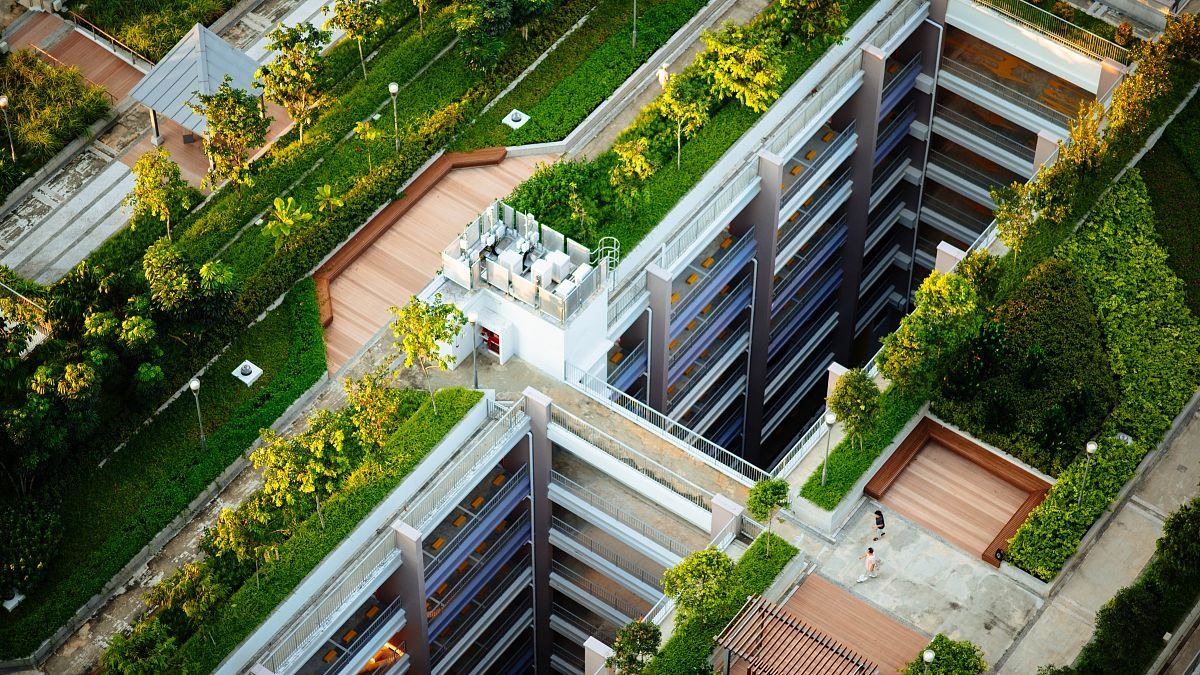
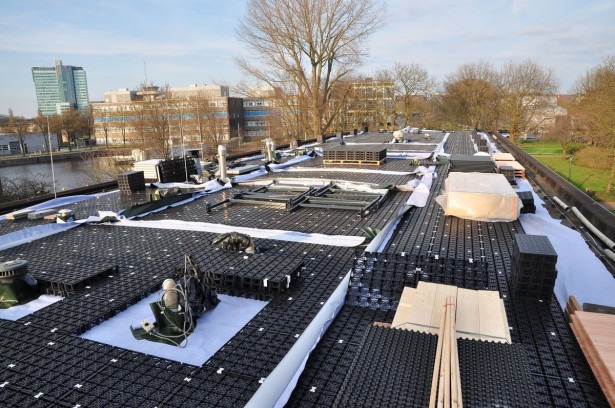
In Basel, green roofs are mandatory to absorb heat and reduce pollution. In Amsterdam, smart roof programs capture rainwater to mitigate flooding. But those policies stem from clear climate adaptation strategies, accompanied by incentives and subsidies for residents. They are embedded in long-term urban planning.
Indonesia’s gentengisasi, however, does not appear to arise from an urgent climate mitigation strategy. It stems from aesthetics and comfort—and, if examined more closely, from the overflow of coal waste.
Building an economic ecosystem around FABA means creating:
- New supply chains
- New derivative industries
- New economic interests
All of which require a steady supply of coal ash.
The broader the FABA market becomes, the stronger the economic incentive to keep coal power plants running. Instead of reducing the source of waste, we are building new markets to absorb it. A true circular economy should reduce waste by reducing its source. In the energy sector, that means accelerating the retirement of coal plants.
If FABA production reaches tens of millions of tons annually, it is not merely a waste issue. It is a sign that Indonesia’s energy system remains deeply dependent on coal. Energy transition should shrink FABA production, not search for ways to keep tens of millions of tons of coal ash “useful.”
In the end, tiles may indeed be cooler. They may be more beautiful. They may enhance the visual landscape of cities and villages.
But the climate crisis is not about how roofs look. It is about where the electricity comes from. It is about whether Indonesia is truly reducing its dependence on coal or simply polishing its byproducts to appear more acceptable.
We may end up with neater rooftops.
But if the electricity still comes from the same coal plants, if waste continues to be produced on a massive scale, if state reserve funds are used to absorb coal ash instead of accelerating renewable energy, then gentengisasi is not merely an architectural project.
It becomes a symbol of policy direction.
At this point, gentengisasi can be read as symbolic: rather than accelerating coal plant retirement, the state is building a derivative economic ecosystem around coal. From electricity, to waste, to building material.
Gentengisasi may solve part of the waste problem in the short term. But in the long run, energy policy direction remains the key.
If coal plants continue to operate, FABA will continue to exist. If FABA continues to exist, the state will continue searching for new markets to absorb it. This cycle risks distancing Indonesia from a genuine energy transition.
The fundamental question is not merely whether FABA can be turned into roof tiles.
Is this a step toward a real energy transition, or a subtle way of extending the life of coal, one tile at a time?
