

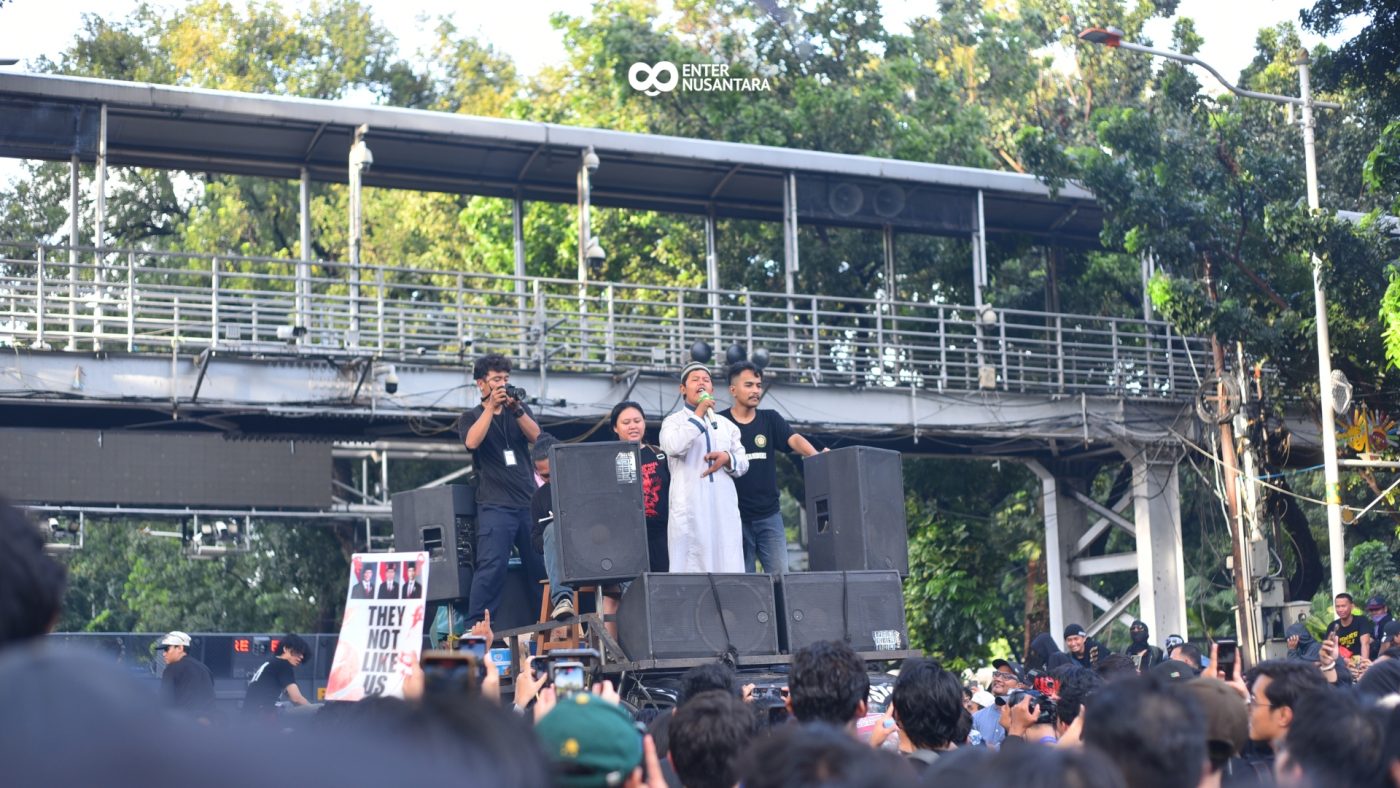
Jangkara, a digital research company, reported that the hashtag “Indonesia Gelap” that echoed on social media was filled with negative sentiments. The hashtag received 81 percent negative sentiment during February 2025. The analysis was conducted on 64,816 comments on X social media.
Based on an analysis of 64,816 comments on the X platform, it was found that 81 percent of them contained negative sentiments, with the dominant emotion being ‘anger,’ which reached 37 percent, said Khoirul Rifai, Assistant Research Manager at Jangkara, in an official statement on Tuesday, March 18, 2025.
Khoirul said that the emergence of the Indonesia Gelap hashtag reflects the deep disappointment of the Indonesian people towards a number of government policies that are considered not in favor of the public interest. Some of the policies that have drawn criticism include budget cuts that are considered not on target and have a negative impact on public services; restrictions on the distribution of subsidized LPG that make it difficult for small communities to meet household energy needs; regional head retreat activities that are considered wasteful and do not show sensitivity to the economic conditions of the people; and the establishment of Danantara, a new entity that is considered full of elite interests and does not go through a transparent process. The hashtag became a medium for expressing disappointment as well as a form of public pressure on the government to be more responsive and accountable.
Not only have these policies triggered public disappointment across the social and economic spectrum, but they have also impacted the significance and regulation of tackling the climate crisis. Untargeted budget cuts have also resulted in limited funding for environmental programs, including shifting to renewable energy transition, forest rehabilitation, pollution control, and climate change adaptation in vulnerable areas. This certainly weakens the country’s capacity to deal with the impacts of the climate crisis, which are increasingly threatening people’s lives, such as floods, droughts, rising sea levels, and crop failures.
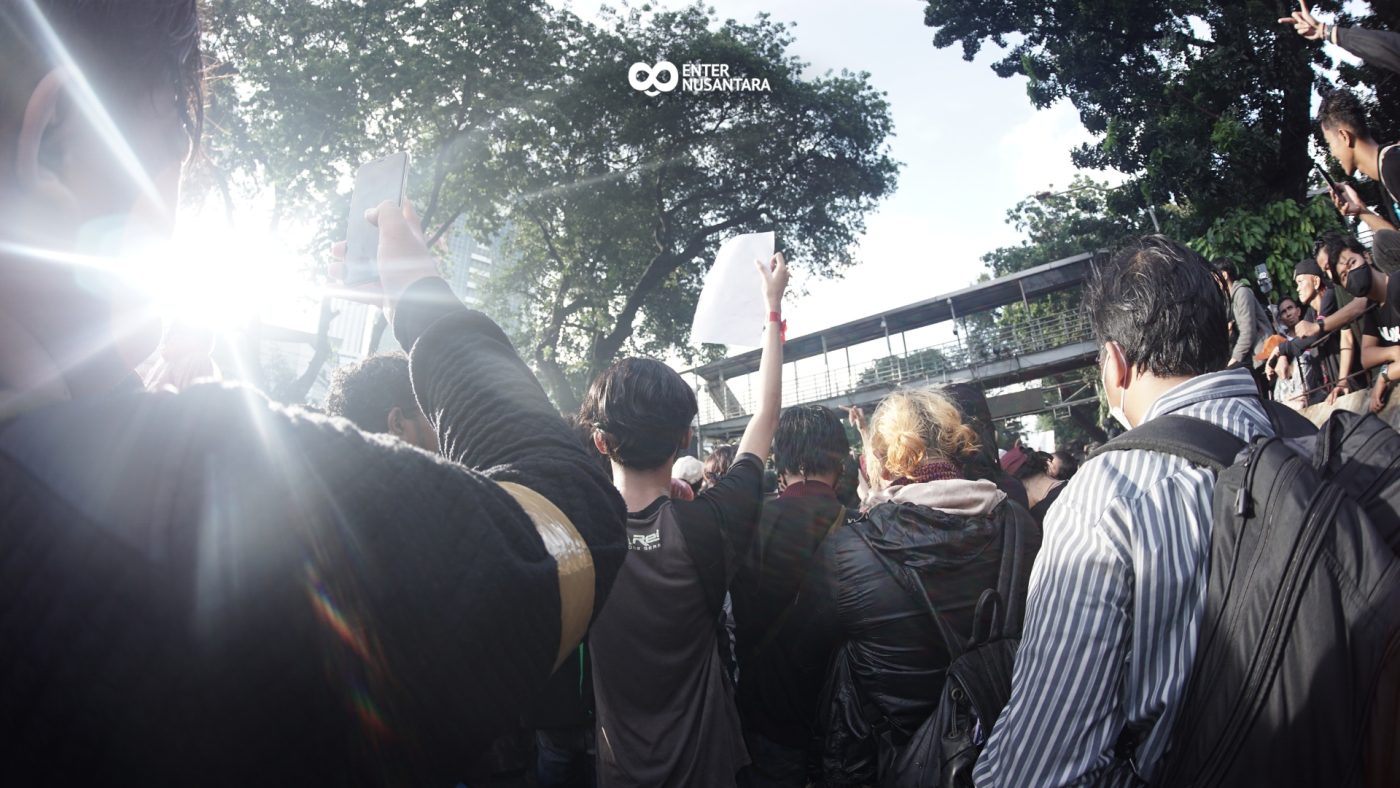
On the other hand, official retreat policies and the establishment of new entities such as Danantara are often accompanied by large-scale development projects that have the potential to open up new land, displace people’s living space, and trigger deforestation and environmental degradation.
The Indonesia Gelap hashtag is not only a matter of haphazard policies but also has an impact on aspects of ecological justice. In this case, we can see the government’s efforts in commitment to ecology are very low. Plans for a low-carbon development transition are just talk, and Indonesia itself has never been serious about its Paris Agreement commitments.
In this case, Indonesia is not doing well. Not just because of the electricity crisis that occasionally creeps into homes, but because of a crisis of light in a broader sense: an ecological crisis, a crisis of democracy, justice, and alignment with the people.
The Indonesia Gelap hashtag is not about streetlights going out. It’s about the dark conscience of the rulers who are increasingly distant from the suffering of the people. When power is celebrated like a lavish veil party, the people are rewarded with inequality, silencing, and neglect.
Day by day the resistance is expanding; these actions are small candles that slowly burn the collective consciousness. The people will not give in to hypocrisy; the people realize that hope has not been completely extinguished.
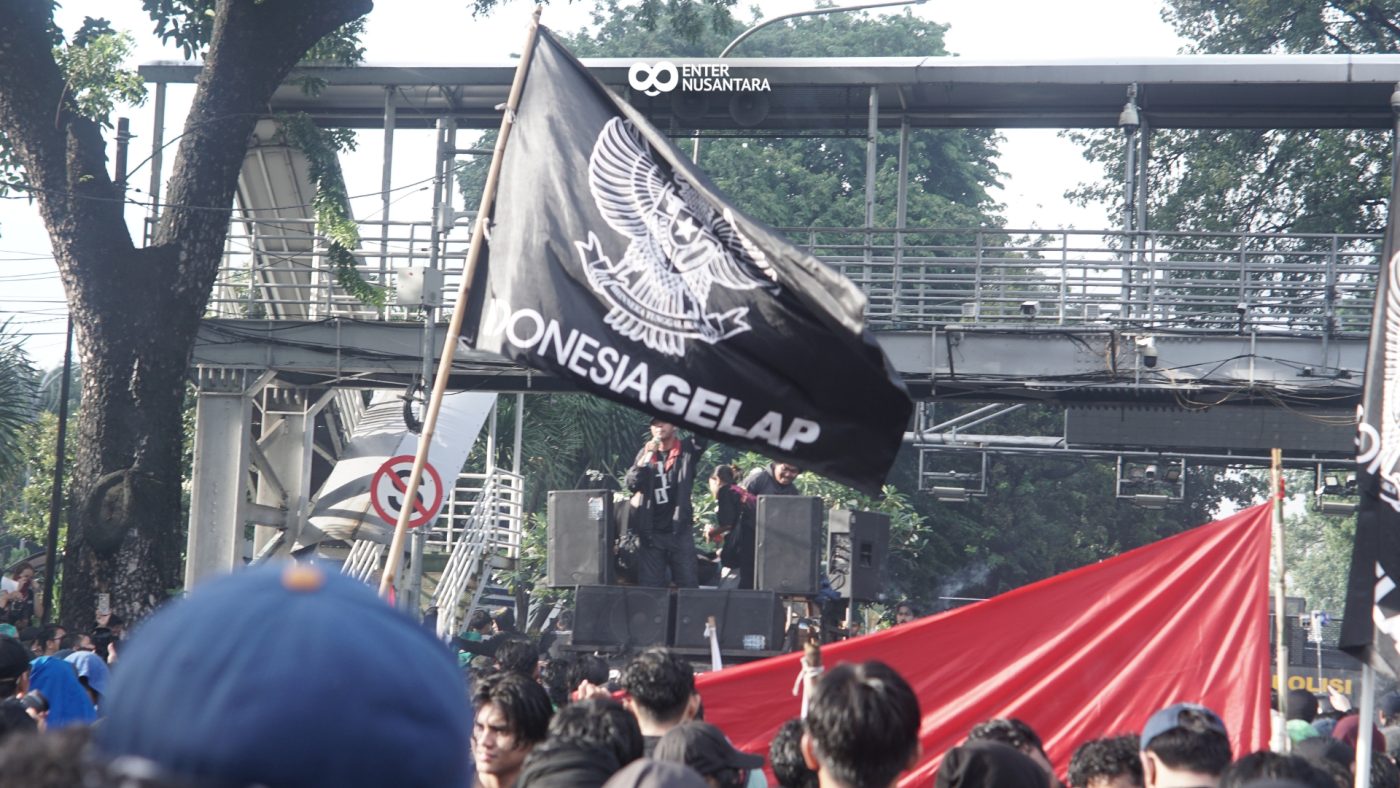
Enter Nusantara is present in the midst of the darkness of the current situation. Enter Nusantara is not just a spectator but has become part of the womb of those who continue to ignite the fire of resistance.
At a time when democratic space is narrowing, when people’s voices are being marginalized, when the marginalized are suffering, and when the state’s alignment with the people feels increasingly false, we choose to stand and be with the oppressed people of Indonesia today. In the Indonesia Gelap action, we spread and expand the reach of resistance by taking to the streets, not because we want to, but because we know change will not come if we just wait.
Enter Nusantara is committed to continuing to be in the ranks of the community not only in action, but also in collective work to expand awareness, build alternative narratives, and fight for social and ecological justice.
