


Who doesn’t know Greta Thunberg?
Greta Tintin Eleonora Ernman Thunberg, born January 3, 2003, in Stockholm, Sweden, is a prominent environmental activist known for her efforts to combat climate change. Greta comes from a family consisting of an opera singer mother and an actor father. Diagnosed with Asperger’s syndrome, commonly classified as an autism spectrum disorder, Greta exhibits the intense focus characteristic of the condition, channeling it into her commitment to climate activism.
Greta is a remarkably consistent figure in fighting for issues, particularly climate change. She first became aware of climate change at around the age of 8, and after realizing the problem, she began to act consistently on the issue she was fighting for by making significant lifestyle changes, starting with adopting a vegan diet and refusing to travel by airplane, both choices aimed at reducing greenhouse gas emissions.
School Strike for Climate: The Beginning of a Global Movement
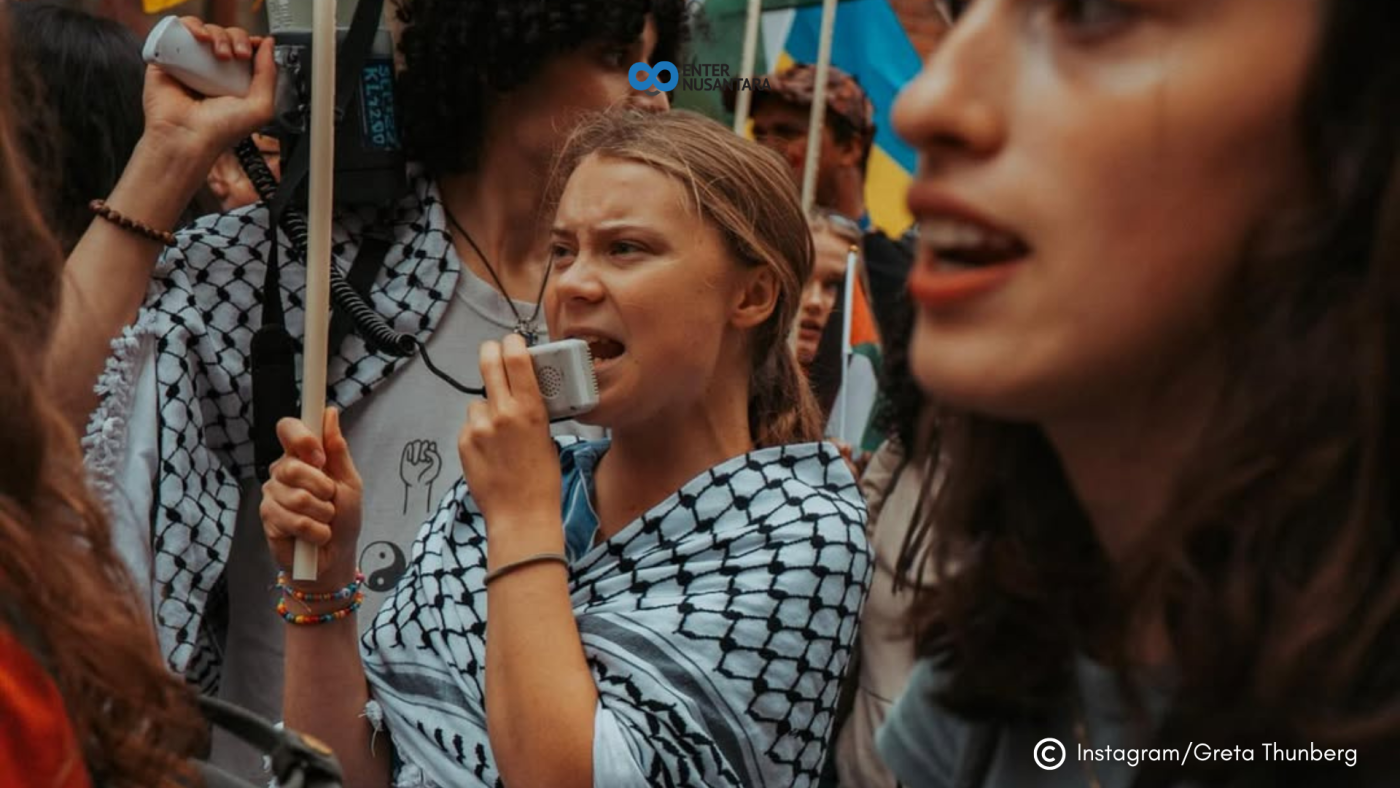
She became known to the international public in 2018, when at the age of about 15 she went on a school strike every Friday, standing in front of the Swedish parliament with a poster that read “Skolstrejk for Klimatet” (“School Strike for Climate”). This action inspired other young people to get involved in a global movement called Fridays for Future. This movement succeeded in raising awareness among young people in several countries around the world to protest the lack of government action on the climate crisis. This movement is not just a call from young people to save the planet but also a form of resistance against an economic and political system that sacrifices the future for the benefit of capitalist bureaucrats.
From Climate to Humanity: Greta and the Global Sumud Flotilla

At under three decades old and still very young in the struggle, Greta has succeeded in bringing her fighting spirit to another ocean: the sea of determination called the Global Sumud Flotilla. A global civil society movement that has chosen to sail to break the Gaza blockade imposed by the modern form of occupation carried out by the Zionist state of Israel. This movement, carried out without weapons but with courage and humanity, reminds the world that it needs peace, not violence. “Sumud” in Arabic means steadfastness, and it carries a profound meaning of perseverance without losing one’s dignity as a human being. While major nations choose to ignore climate destruction and allow genocide to occur in Gaza, civil society figures like Greta choose to sail the seas with the conviction that solidarity must continue to move forward, not stop on the screen or the diplomatic stage.
Greta Thunberg is a symbol of youth resistance in the face of a world that easily forgets injustice. Since she first protested against climate change in the Swedish parliament with a piece of cardboard that read “School Strike for Climate,” she has never stopped fighting. She continues to speak out about climate justice and humanity. Year after year, from the streets of Stockholm to the podium of the United Nations, Greta has carried the same message: that the climate crisis and the humanitarian crisis are inextricably linked.
Resilience That Brings About Change
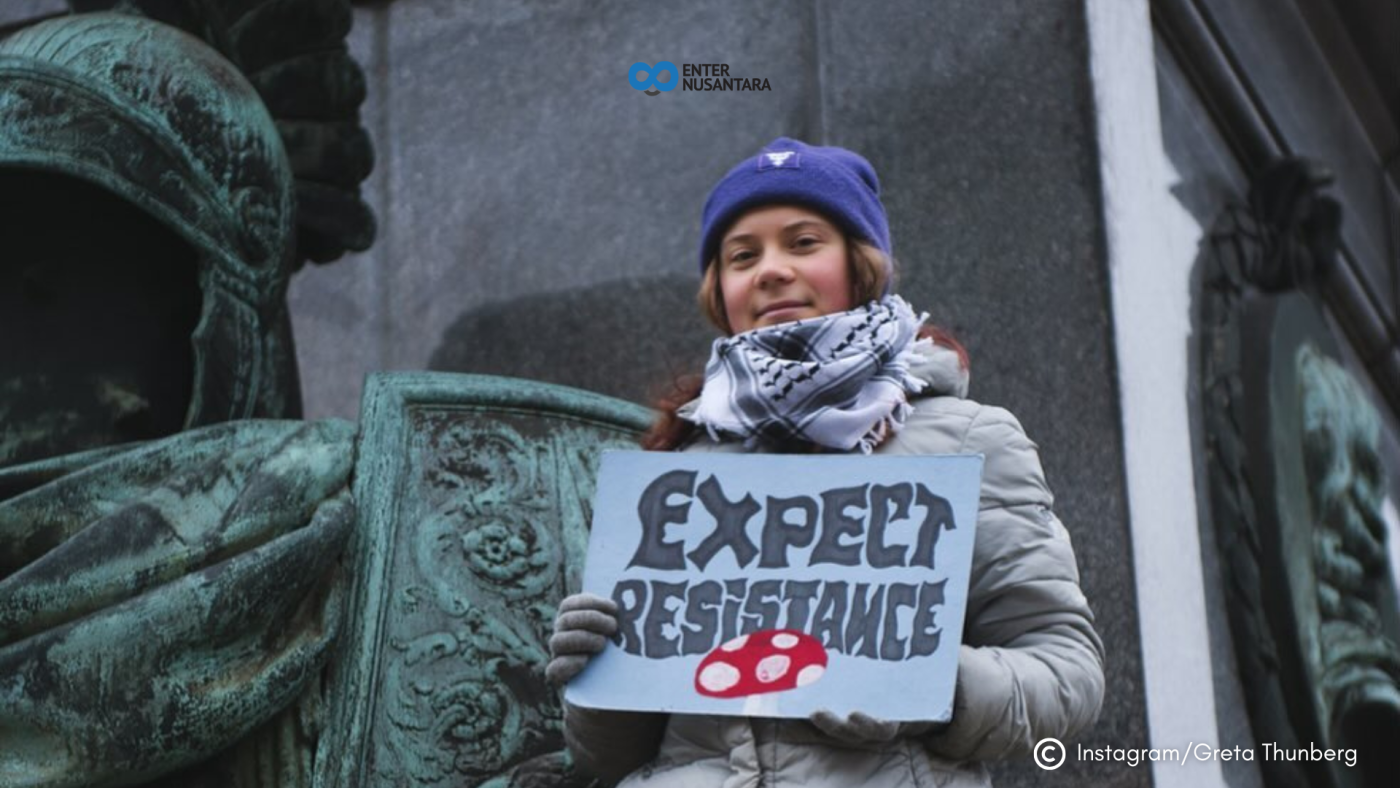
With every step she takes on climate and humanitarian issues, she shows the world that the struggle is not just about popularity but about perseverance until we win what we are fighting for. When the media spotlight began to fade, Greta chose to walk the quiet path of continuing to protest, sailing across oceans without planes, and joining humanitarian actions such as the Global Sumud Flotilla. Her consistency in fighting is proof that change comes from determination, not political interests. For Greta, fighting for climate and humanitarian issues is not only about saving the earth from destruction but also about saving and reminding us that human dignity comes from caring for one another.
