

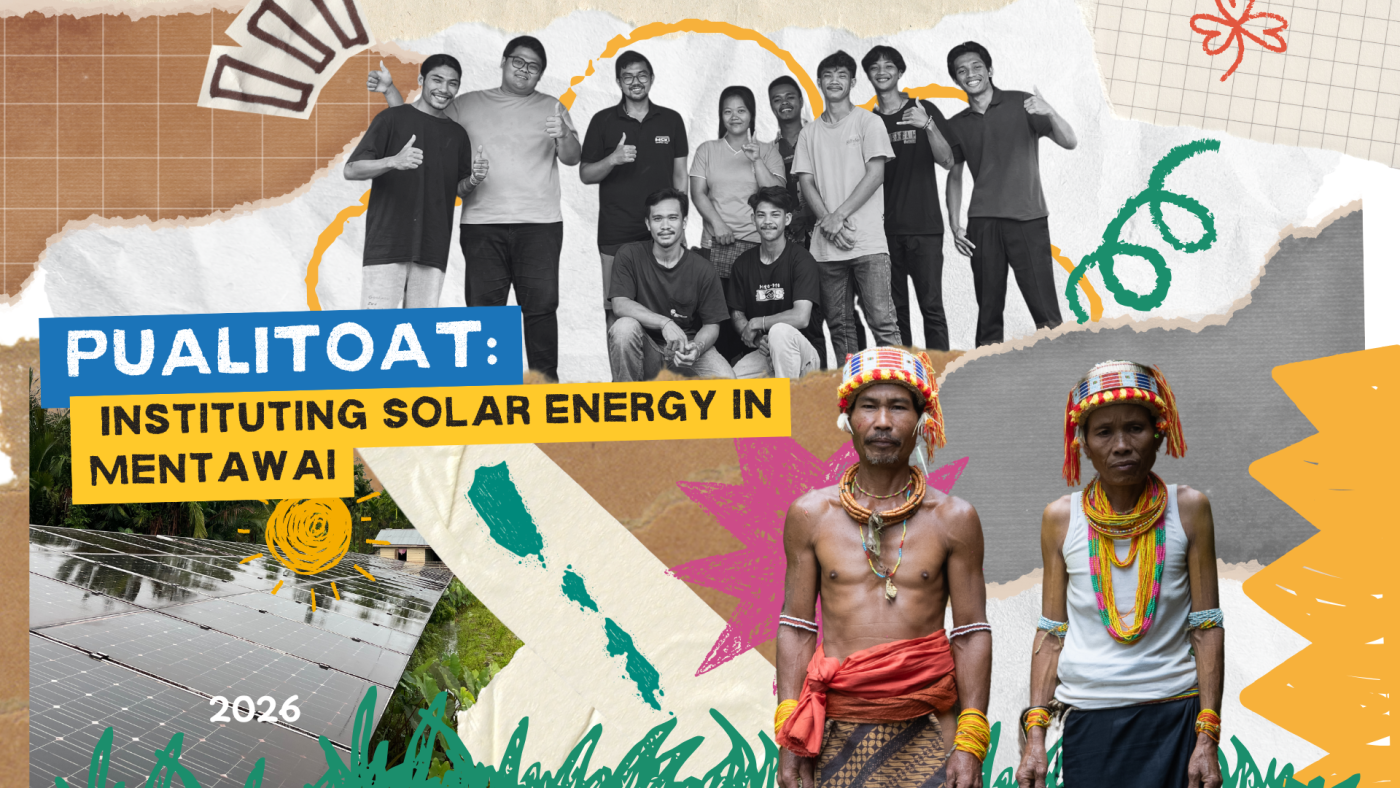
Numbers on paper do not always show the real story. In 2024, the government said that the Mentawai Islands are no longer an “underdeveloped region.” But does this mean everyone there now has electricity? Not really.
If you visit Siberut Island in Mentawai, you will see a very different reality. In far villages like Gulu-guluk, Gotab, and Limu, the night is still completely dark. People have only two choices. They must use small, dim oil lamps called lampu togok, or use noisy diesel generators that stop working right at midnight.
Mentawai is a clear example of unfair energy access. It is world-famous as a beautiful place for surfing. But while tourists enjoy the waves, the local people are left without basic electricity. We saw this sad reality with our own eyes during our trip.
Why Did a Multi-Million Dollar Project Become Trash?
Can you imagine a big, expensive green energy project breaking down in less than three years? That is exactly what we found in Mentawai. In 2019, the government built three power plants that used bamboo to make electricity. This project cost US$12,4 million from foreign donation money.
The plan sounded great: the plants would burn local bamboo to make power, and the village people could make money by selling bamboo to the plants. But the project failed because it did not fit the local life. The big machines came from India, and when they broke down, nobody knew how to fix them and there were no spare parts in Indonesia. Also, the new bamboo planted for the project turned into a bad weed that ruined the villagers’ farms.
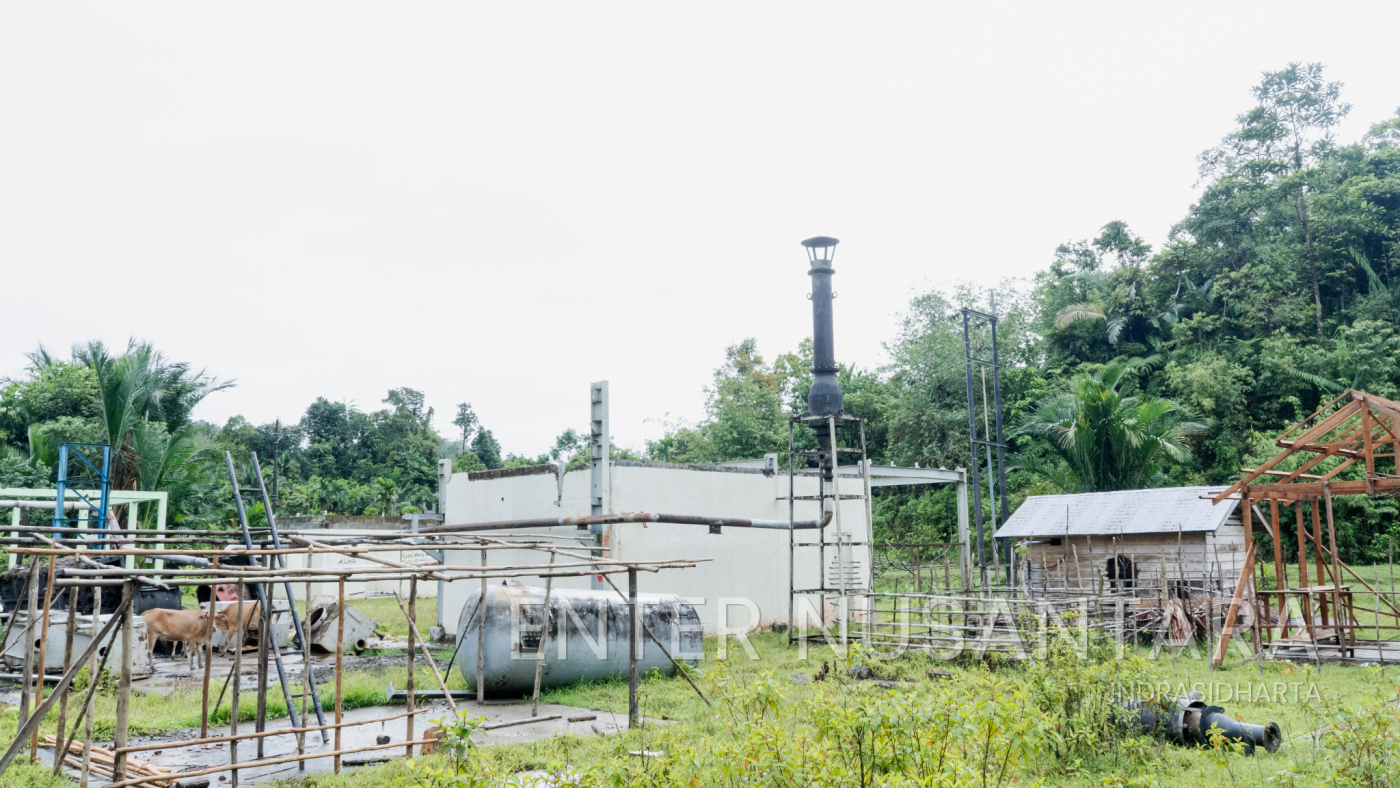
The people were very sad and angry. In the end, they broke down the buildings to take the metal and roofs to sell. When our team arrived, the big project was already gone, turned into flat ground. This teaches us a big lesson: energy projects will always fail if the technology does not fit the daily life of the local people.
How Climate Crisis and Land Problems Keep Mentawai in the Dark
Imagine if your village has no power source at all, and your only fuel must come by boat across a dangerous sea. This is the scary life that Mentawai faces every day.
Right now, Mentawai gets its electricity from diesel fuel shipped from the city of Padang. But because of climate crisis, the weather at sea is becoming wild and dangerous. The people still remember a big storm last year that caused huge floods in Siberut and stopped all the boats. When the supply boats cannot come, Mentawai is instantly cut off and runs out of fuel.
The problems are not just at sea. On land, our team saw that building electricity lines is very hard because of land disputes with the government nature reserve agency (BKSDA). The government drew nature borders without asking the locals, and these borders sit right on the villagers’ homes. Because the rules are confusing, building simple roads and power lines to far villages like Saliguma has stopped completely.
So, Why Are Solar Panels the Best Answer?
If bamboo power failed and diesel fuel makes everyone worry about bad weather, what can we do? The answer is right above our heads every day: the sun. In the local Mentawai language, solar energy is called Pualitoat.
For far villages that do not have government electricity lines (off-grid), we believe solar power is the easiest and best answer because:
- It is simple and independent. You do not need giant buildings. As long as the sun rises, you have electricity. No one needs to worry about fuel boats from Padang anymore.
- It saves people’s time. Villagers do not need to spend their days cutting wood or drying bamboo for power. They can use their time to farm or do other useful work.
- It is clean and quiet. There is no loud noise and no dirty smoke. It keeps the beautiful nature of Mentawai clean.
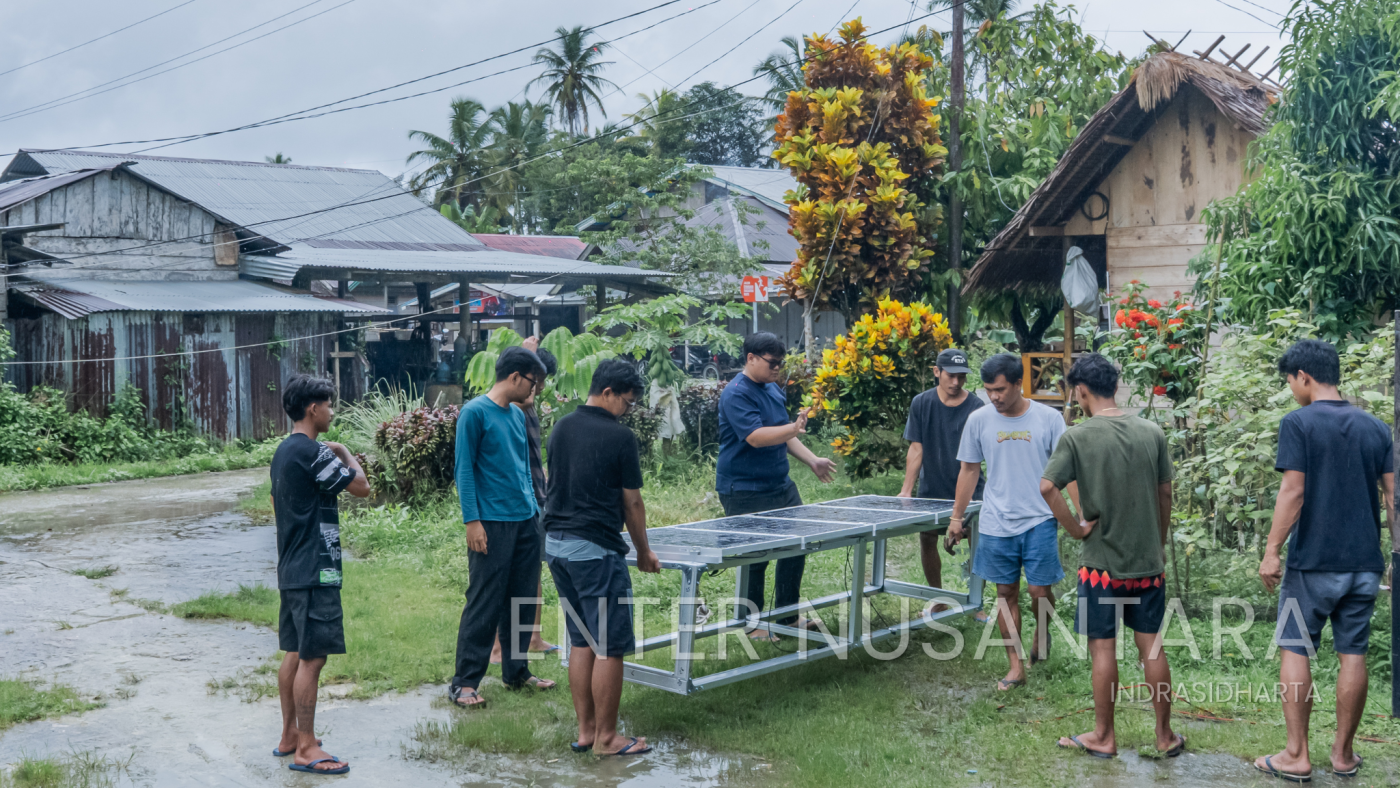
Through a program called Sekolah Energi (Energy School), Enter Nusantara and the Sinuruk Community are starting to help. We trained 10 local youth to become independent solar technicians. Now, they know how to install, fix, and move solar panels safely when a disaster happens. In Matotonan Village, we are also helping to fix old power systems and replace them with rooftop solar panels for every house, so everyone feels like they own it together.
Giving energy to Mentawai is not just about changing machines. It is about fairness and helping people live a good, independent life. Bringing Pualitoat to Siberut is a real step so that the indigenous people are no longer left behind in the dark.
Do you want to know more about our data, the land problems, and the plan for solar panels in Mentawai’s far villages?
You can read the full research easily in our booklet, “Pualitoat: Membumikan Energi Mentari di Mentawai” published by Enter Nusantara.
Let’s work together so everyone can get clean energy!
