

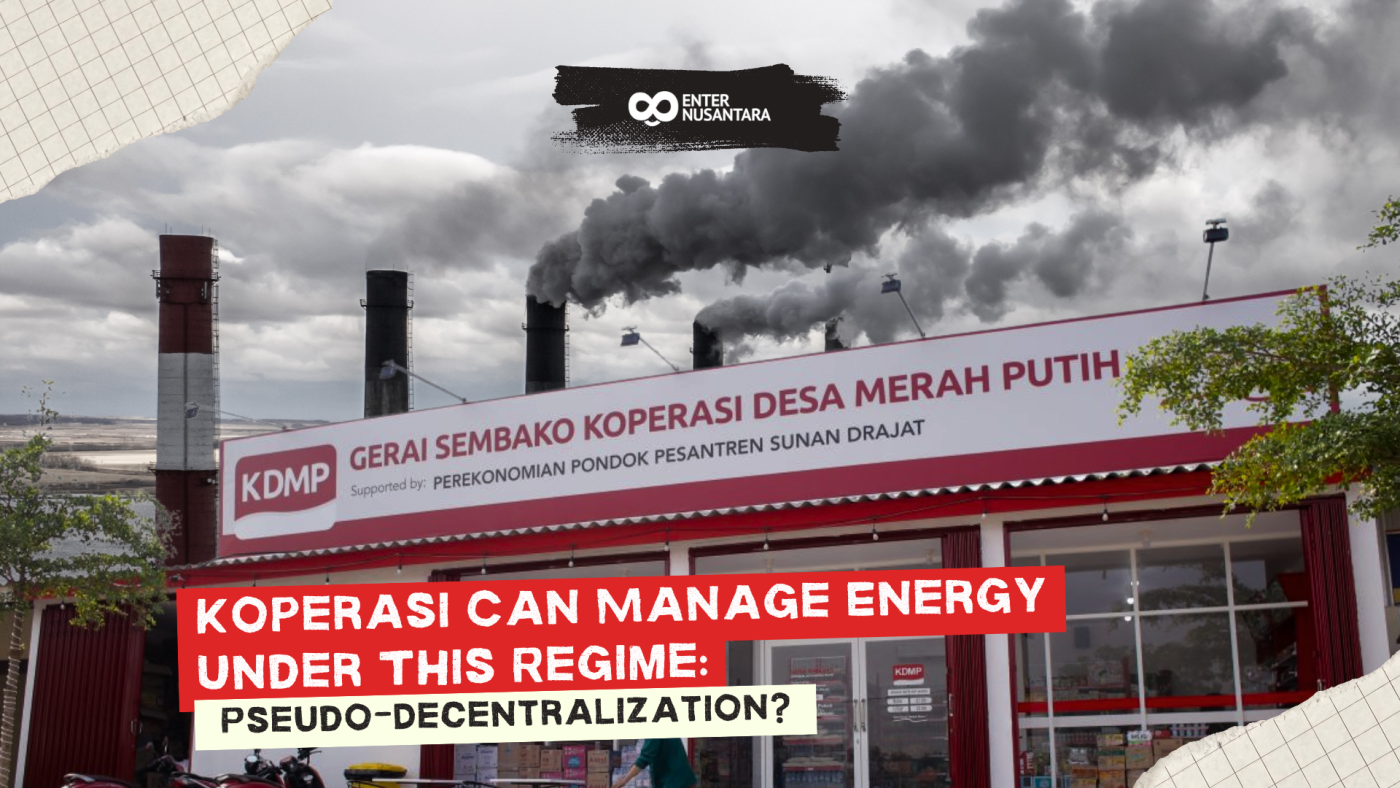
It is official! Koperasi can now manage critical sector especially energy. It was stated by the Minister of Koperasi on 15 July 2026 that koperasi can manage energy sector from petroleum, palm oil, minerals mining, to renewable energy. Some of the regulatory groundwork for this is already in place. Mineral and Coal Mining Law (UU Minerba) has allowed mining to be managed by koperasi since 2025. The partnership between Ministry of Koperasi and PT Agrinas Palma Nusantara has already been signed to enable koperasi mengolah perkebunan sawit.
This new policy isn’t actually limited to Koperasi Desa Merah Putih (KDMP) that has been facing a lot of criticism this past year. It actually applies to other koperasi, even the established one. However, the minister noted that the capability of Koperasi plays a big role in deciding whether they can manage these critical sectors or not.
On the surface, this new breakthrough appears to be a concrete steps for energy decentralization. This policy creates the impression that the control for energy resources shifted from centralized actors to community-based and the people. While in theories it might seems like it, we need to critically examine the implementation, distribution of power, and accountability mechanism.
To begin unpacking this, first, we need to take a closer look at who actually has the capacity to participate. While this policy enable koperasi to manage local energy resource, but not all koperasi has the capacity to manage these resources. Financial resources, technical expertise, organizational capacity, and equipments are required. This raises an important concern. Without clear regulations, this policy could enable large and powerful companies to expand their wealth and control through koperasi as their vehicles, undermining the original goal of empowering local communities.
Secondly, having “more players” also means having more entities that must be monitored and held accountable for their environmental responsibilities. Extractive sectors such as mining and palm oil carry significant environmental risks and require strong institutional capacity to manage waste, comply with environmental standards, obtain and adhere to land-use permits, and carry out proper reclamation and post-extraction restoration. Yet even under the current system, where mining operations are largely dominated by established companies, environmental compliance and permitting remain persistent challenges. If regulators continue to struggle with enforcing these obligations among large mining companies today, expanding the sector to potentially hundreds or thousands of new operators raises serious questions about whether adequate oversight can realistically be maintained.
Lastly, there are serious concerns that this policy could expand the military’s role through KDMP program. In recent years, the military has become increasingly involved in civic space, from agriculture, kitchen, and domestic needs. With this new policy, There are concerns that this policy may pave the way for greater military involvement in the energy sector, an essential sector that affects everyone’s daily lives. If that happens, it could further deepen the militarization that has already been taking place, weakening civilian oversight and democratic governance.
This policy is not inherently a bad idea. In principle, it aligns with the goals of energy decentralization by giving local communities a greater role in managing their own resources. However, decentralization is only meaningful if power, ownership, and economic benefits are genuinely transferred to local communities, not captured by corporate interests or other powerful actors. True energy decentralization is not measured by simply appointing cooperatives to manage energy resources, but by whether local communities genuinely own, govern, and benefit from their energy resources.
Bibliography:
CNN Indonesia (2026). Menkop Tegaskan Koperasi Boleh Urus Tambang, Bukan Hanya Kopdes. cnnindonesia.com
Prayudhia, Maria (2026). Menkop: Pengelolaan Tambang Tak Harus oleh Koperasi Desa Merah Putih. antaranews.com
Chaterine, Rahel. Damarjanti, Danu (2026). Menkop: Koperasi yang Kelola Tambang dan Sawit Sebaiknya Bukan KDMP. nasional.kompas.com
Assathir, Muhammad (2026). Koperasi Desa Merah Putih Bisa Kelola Tambang hingga CPO, Serang Ungkap Syaratnya. banten.tribunnews.com
PWYP Indonesia (2025). Risiko Jika Koperasi Mengelola Tambang. pwypindonesia.org
DA, Ady (2026). YLBHI: 9 Masalah Koperasi Merah Putih, dari Rawan Koprupsi hingga Potensi Jadi Alat Politik. hukumonline.com
