

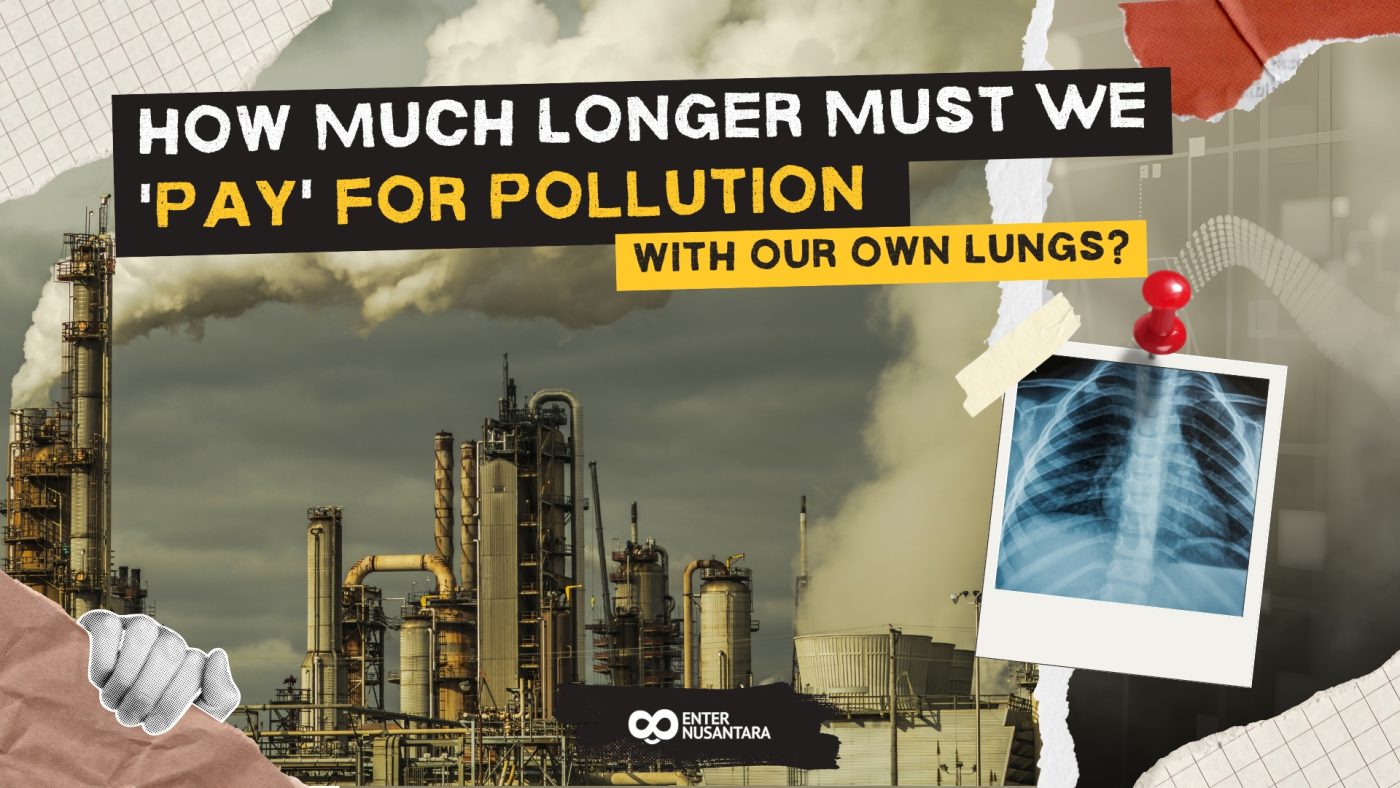
Take a peek out your window or think back to your commute to the office, campus, or school this morning. Is the sky blue, or does it look like it has a hazy grey filter on it? Also, do your eyes feel a bit stingy?
If your answer is yes, don’t worry, you’re not alone and it’s not just your imagination!
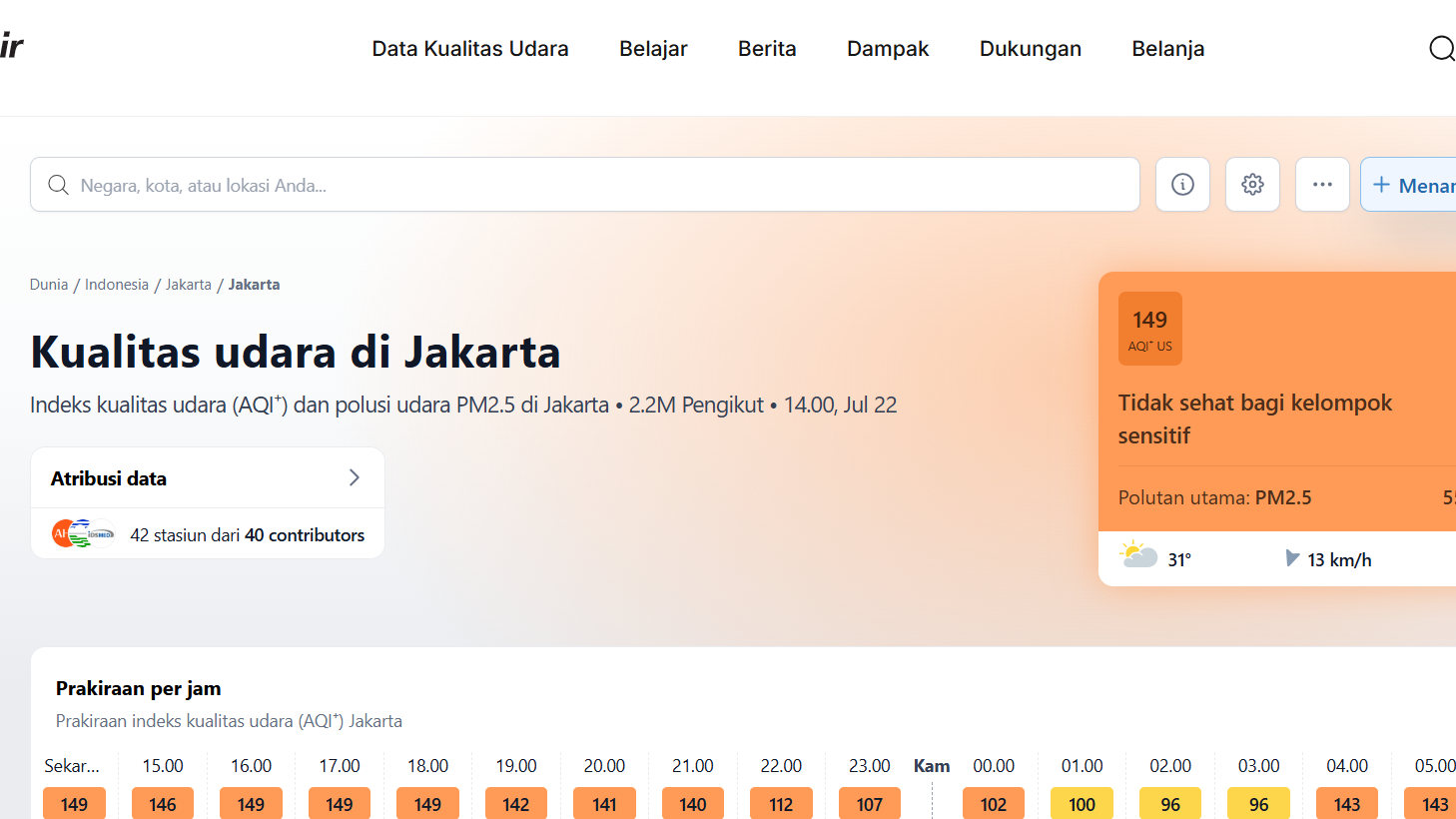
Data from IQAir shows numbers that will make you sigh in dismay.
Jakarta’s Air Quality Index (AQI) stands at 149, which falls into the “Unhealthy for Sensitive Groups” category. Meanwhile, the concentration of Particulate Matter (PM2.5) has hit 55 µg/m³—aka 10.2 times higher than the WHO annual guideline standard!
FYI, the tiny dangerous particle behind all this is called PM2.5. It’s super tiny—less than 2.5 micrometers, which is way smaller than a single strand of hair. But because it’s so small, it can easily bypass our nasal hair and make its way straight into our lungs and bloodstream.
That’s why sensitive groups like children, the elderly, or those with a history of asthma are advised to scale back outdoor activities for now.
Masks and Air Purifiers Are Just “Painkillers,” Not the Main Solution!
The advice we hear most often when the air gets bad is almost always the same:
- Wear a mask
- Turn on the air purifier
- Avoid going outside for now
But is it fair that we are the ones who have to keep spending money on masks and electricity for air purifiers, while the actual sources polluting the air get to keep spewing smoke every day without consequence? Sigh.
Wearing a mask is super important as a first aid step, but it’s like using a bucket to catch drips from a leaky roof. If the roof never gets fixed, the bucket is just going to keep overflowing, right?
But Where Is All This Smoke Actually Coming From?
Jakarta’s air pollution doesn’t just magically appear out of thin air. Its primary sources are rooted directly in our energy choices: millions of gas- and diesel-powered vehicles commuting every day, plus smoke from coal-fired power plants (PLTU) and factories scattered around the Jabodetabek area.
Solutions to Get Our Blue Skies Back
Now, this is where the Energy Transition comes in! Don’t picture this term as just a stiff meeting among government officials in a high-rise building.
Simply put, the energy transition means moving away from dirty, old-school habits like burning coal and gasoline, toward clean, modern alternatives—renewable energy like solar, wind, and eco-friendly electricity.
How do we bring back our blue skies permanently?
- Phase out dirty coal power plants gradually and replace them with Renewable Energy (EBT).
- Get serious about integrated electric public transport, making it easier and more appealing for people to leave their personal vehicles behind.
- Support self-sustained clean energy, such as installing rooftop solar panels on homes and city buildings.
As young people, there are several real steps we can take!
We need to keep safety today by continuing to wear masks when stepping outside and keeping an eye on air quality updates via apps. Beyond that, let’s speak up on social media!
Don’t just stop at complaining about how “stuffy” it feels; tag the relevant accounts and remind everyone that the long-term fix is an Energy Transition right now!
And don’t forget to prioritize public transport to reduce our daily carbon footprint starting from the little things we can control.
Because clean air isn’t a luxury item—it’s a basic right for all of us to breathe freely.
