

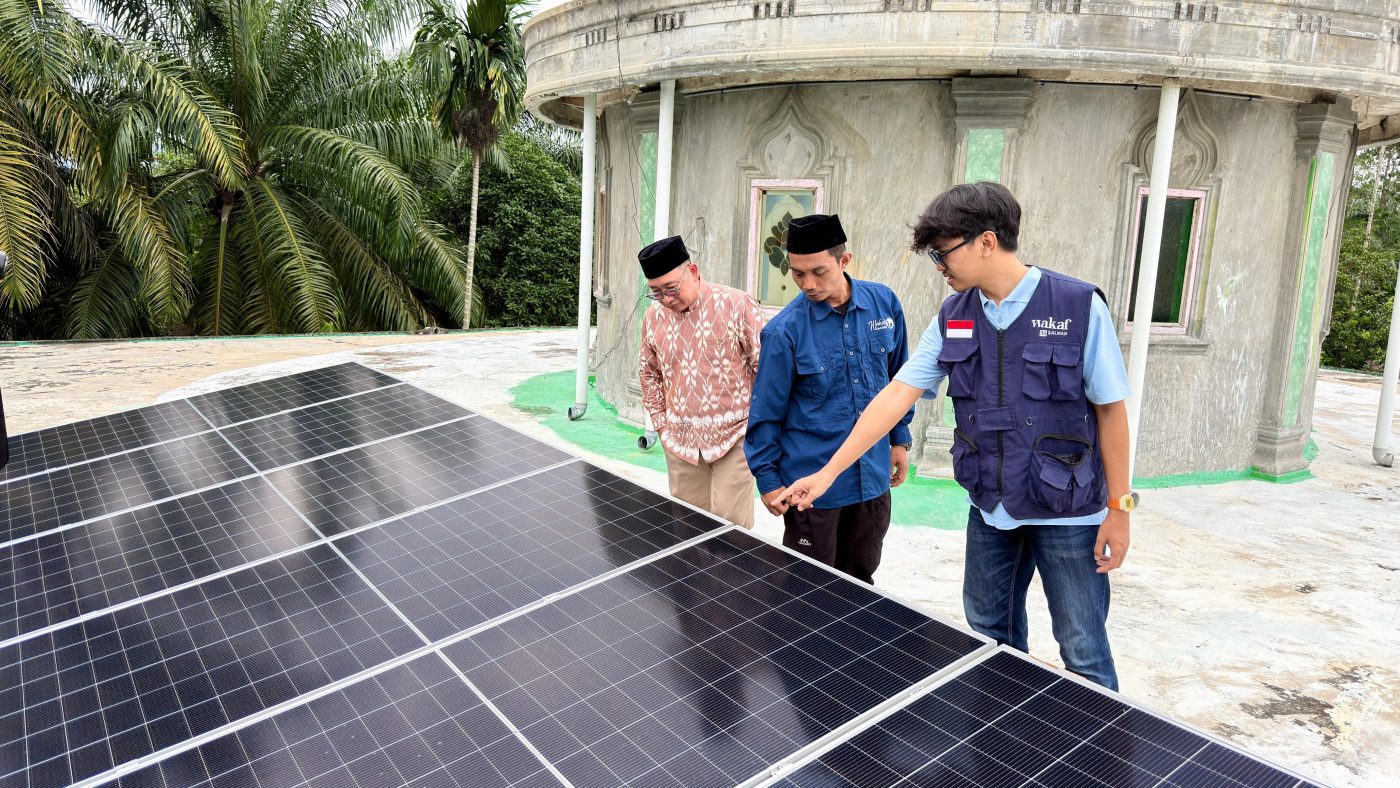
Amid Indonesia’s energy crisis, Enter Nusantara, together with the NUUR+ consortium and Bank Indonesia, supported a disaster-prone community through solar panel installation in the Nurul Iman Mosque in Babo Village, Aceh Tamiang, Nanggroe Aceh Darussalam, on Tuesday (October 6, 2026). This is the result of the Energy Waqf program, in which Enter Nusantara serves as the implementing partner responsible for the installation process and community education on renewable energy.
The rooftop solar power plant at the Nurul Iman Mosque has a capacity of 7,320 Wp (Wattpeak) and uses a hybrid system. Not only does it provide a clean alternative energy source, but the Energy Waqf program also strengthens the resilience of Babo Village residents in this disaster-prone region. It is worth noting that the Nurul Iman Mosque served as an evacuation center, a shelter, and a distribution hub for disaster relief for residents of Babo Village and the surrounding areas during the flash floods in 2025.
Furthermore, the installation of these solar panels is part of an effort to support climate mitigation and the energy transition.
“As a youth organisation, Enter Nusantara consistently supports a just and democratic energy transition. Our contribution — installing rooftop solar power systems and providing renewable energy education to communities in Aceh Tamiang through the Energy Waqf programme — is a tangible representation of our dedication to advancing Indonesia’s energy transition and safeguarding the future of our planet, which is under increasing threat from the climate crisis,” said Enter Nusantara Coordinator Reka Maharwati.
Since 2015, Enter Nusantara has been installing solar panels in various grassroots communities across Indonesia to support climate mitigation and a just energy transition. With the installation of a rooftop solar power system at the Nurul Iman Mosque, Enter Nusantara has now implemented community-based energy transitions at six mosques in different parts of Indonesia.
“This effort is part of our exploration to find Islamic-based financing alternatives to promote a just energy transition in communities. We hope that the installation of solar power systems at mosques will encourage surrounding communities to adopt renewable energy in their own homes and communities,” said Reka.
As an implementing partner of the Wakaf Energi program, Enter Nusantara has also taken the initiative to conduct training on the installation, management, and maintenance of solar panels for communities near the beneficiary mosques. This is to ensure that the community is equipped to actively support the energy transition.
The Village Head of Babo, Khairi Ramadhan, expressed his appreciation to NUUR+ and Bank Indonesia for providing solar panels to his communit, which frequently experiences power outages.
“We extend our deepest gratitude for these solar panels. Our area often faces power outages during floods. Having an independent power supply at this mosque not only provides lighting for worship but also brings peace of mind to the residents. Moreover, with the maintenance training provided to residents, we are optimistic that we can maintain and make the best use of this facility for the long term,” said Khairi.
Meanwhile, Bank Indonesia, one of the wakifs (donors) of the Energy Waqf, stated that their support is part of the institution’s role in promoting inclusive and sustainable economic development in the region.
“A solar panel waqf that is managed productively can support the economic self-reliance of the community, create efficiency, expand social benefits and ultimately contribute to inclusive and sustainable economic growth,” said Yudo Herlambang, Head of the Bank Indonesia Representative Office in Lhokseumawe.
M. Ali Yusuf, a member of the MOSAIC Board of Trustees, views Bank Indonesia’s support as demonstrating the great potential of the waqf instrument in supporting the energy transition and addressing the climate crisis.
“Through collaboration with Bank Indonesia and various partners, the waqf now benefits not only the community and supports the prosperity of mosques, but also plays a major role in preserving the Earth (hablum minal ‘alam). May this synergy inspire more people to realise that we can simultaneously protect the environment and strengthen the community’s economy through waqf,” he said.
The Minister of Religious Affairs, Nasruddin Umar, also fully supports this synergy for the implementation of renewable energy. This support is rooted in Islamic teachings that mandate the protection of nature as part of worship and a responsibility of faith.
For context, the initative of implementing renewable energy in mosques began with the “Energy Shadaqah” program in 2022. Enter Nusantara served as one of the initial driving forces behind Energy Shadaqah as part of MOSAIC (Muslims for Shared Action on Climate Impact). The success of the program attracted support from additional parties, such as the Al-Azhar Waqf Foundation, the Al Jam’iyatul Washliyah organization, Green Justice Indonesia, Salman Home of Waqf, and Bank Indonesia. This development has lead to a shift in the mechanism for distributing aid from shadaqah to waqf so that the benefits of clean energy for the community and mosque can be sustained through the NUUR+ consortium.
