


Amidst the uncertainty and roar of the development machine and the wounds left by centuries of exploitation of nature, the world is looking for a new direction. Human threats and activities have caused global environmental damage due to high greenhouse gas emissions. The climate crisis that has occurred causes various changes to nature, such as ocean acidification, abrasion, global warming, crop failure, and loss of biodiversity, as well as other social problems that continue to impact human welfare, such as unemployment and the storm of layoffs everywhere, causing poverty due to low labor productivity.
In response to this issue, the green economy (green jobs) has begun to be promoted, aiming to integrate economic growth, environmental conservation, and workers’ social welfare. However, the development and implementation of environmentally friendly jobs in Indonesia still face major challenges. A large portion of the Indonesian population remains unfamiliar with green jobs, leading to a shortage of skilled human resources, particularly among communities in remote areas or low-income groups who still struggle to access training related to the green economy.
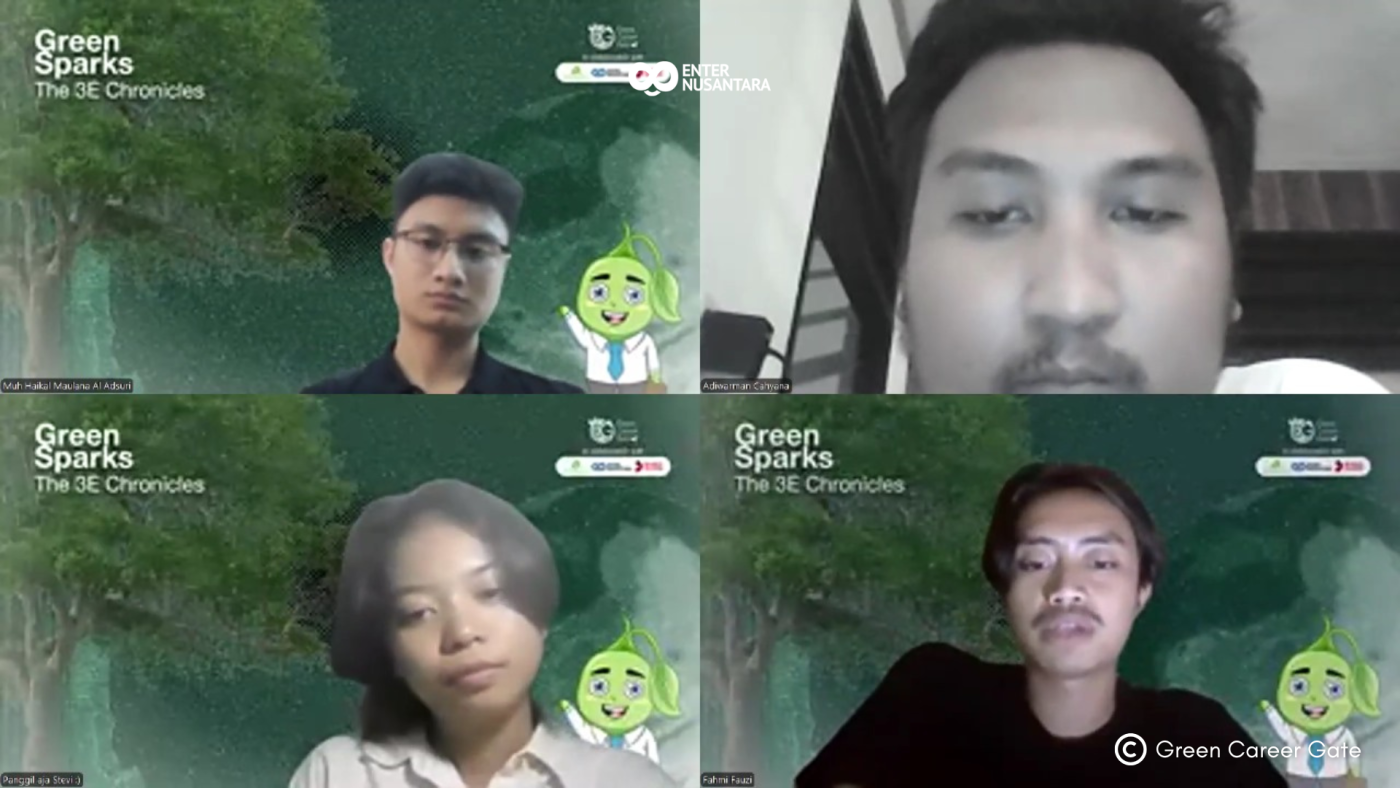
The issue of mass layoffs and the rising unemployment rate in Indonesia continues to escalate. According to data from the 2024 National Labor Force Survey (Sakernas), unemployment in Indonesia has reached 7.2 million people, with the highest rates among those aged 15–24 (Gen Z). In response to this challenge, Green Career Gate emerges as a solution to address both economic development and environmental sustainability. It serves as a space of hope and action led by young people. Through the initiative Green Sparks: The 3E Chronicles (Environment, Economy, Employment), Indonesian youth are invited to collaborate and voice their concerns about their careers and the future of the planet.
Green Career Gate was born from the results of the National Student Conference (NSC) on Energy Transition in 2024, which was successfully organized by Enter Nusantara by gathering several youth representatives from all over Indonesia to discuss the issue of energy transition. Green Career Gate was born from the efforts and support of Enter Nusantara.
Green Career Gate (GCG) is a youth-led social movement that seeks to address two major challenges in Indonesia: the climate crisis and the scarcity of career opportunities. This project focuses on empowering individuals, especially young people, to contribute to environmental sustainability while also creating economic opportunities.
Green jobs are not merely forms of employment that generate income; they are a solution with a mission: to save, restore, and care for the Earth from destruction. Green jobs span across various sectors, agriculture, transportation, energy, and even digital technology, all interconnected by the shared goal of reducing carbon footprints, promoting resource efficiency, and rebuilding a harmonious relationship between humans and nature.
Green Sparks is here to answer all these problems through the aspirations of children. On May 30, 2025, more than 50 young people from various parts of Indonesia gathered virtually in the Green Sparks talk show: The 3Es (Environment, Economy, Employment) Chronicles. Green Sparks is not just a talk show. It is an emotional and inspiring dialogue space that brings together the voices of young people from different backgrounds to discuss the climate crisis and the world of work.
Guided by the collaborative spirit built by young people, this event was successfully organized thanks to the cooperation and initiative of Green Career Gate, as well as the presence and contribution of Enter Nusantara as one of the main speakers, represented by Naba Hudani as Volunteer Coordinator at Enter Nusantara. In the discussion session, Enter Nusantara shared its experience in strengthening the energy transition ecosystem and encouraging youth involvement in action-based environmental movements.
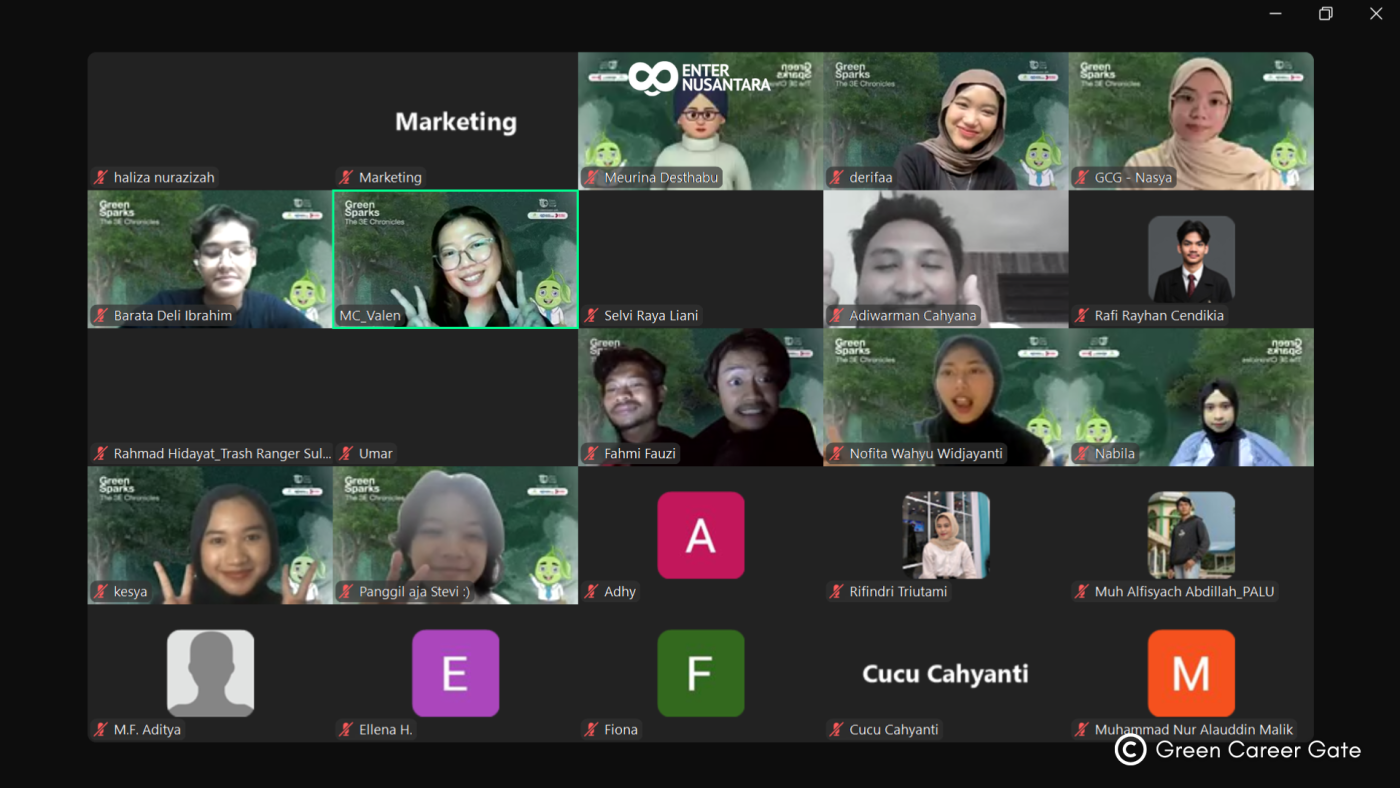
Green Sparks also featured voices from various parties, including Green Neighbour Indonesia (grassroots environmental activists) and ID Next Leader (youth), showing how idealism can be translated into real impact. The discussion also explored systemic barriers such as the green skills gap and market stagnation while dismantling the false dichotomy between struggle and sustainability.
In this discussion, participants were invited to explore and address the various challenges faced by young people: from anxiety about the unstable job market and the pressure to “make money” in an increasingly ecologically damaged world to the lack of access and information about green careers.
The talk show succeeded in opening a space for reflection and reinforcement. Participants not only understood the importance of green careers but also gained new directions, networks, and enthusiasm to get more involved. This event is proof that when idealism meets real movement, collective transformation can be created.
Green jobs give us new hope. A bridge between economic necessity and ecological responsibility. A way to say that work can be part of worship, of struggle, of resistance to ecological injustice. So green jobs are not just a trend. It is the call of the times.

very insightful discussion