

We’ve probably all spent hours staring at our screens, trying to find articles about energy transitions that are simple to understand, ones that don’t make our foreheads wrinkle every two paragraphs. But it’s harder than it should be. Most of what we find is filled with technical terms, layered policies, and climate jargon that quickly exhaust the average reader.
And maybe that’s part of the problem.
When conversations about energy become too technical, they feel distant from everyday life. Even though, in reality, their impacts are anything but distant, they shape the air we breathe, the water we drink, and the spaces we live in.
Today, more and more people agree that we must move away from fossil fuels. We know coal is dirty. We know the climate crisis is real. But when it comes to the actual process of “transitioning,” the conversation becomes strangely more quiet. Few people are really asking: transition to what, how, and most importantly, for whom?
Take one of the most visible examples: electric vehicles.
A person charges an electric car.
(Source: Xinhua News)
In big cities like Jakarta, electric cars and motorcycles with blue license plates are becoming increasingly common nowadays. We often see it in Jakarta traffic. The narrative is compelling: more efficient, more modern, and more environmentally friendly. It feels as though switching to electric vehicles is one of the most concrete ways individuals can contribute to the energy transition.
But the question rarely goes further than that.
To produce a single electric vehicle battery, large amounts of minerals such as nickel are required. Indonesia, now the world’s largest nickel producer, sits at the center of this global supply chain. Indonesia accounts for more than 50% of global nickel production as of the early 2020s, driven largely by demand for electric vehicle batteries.
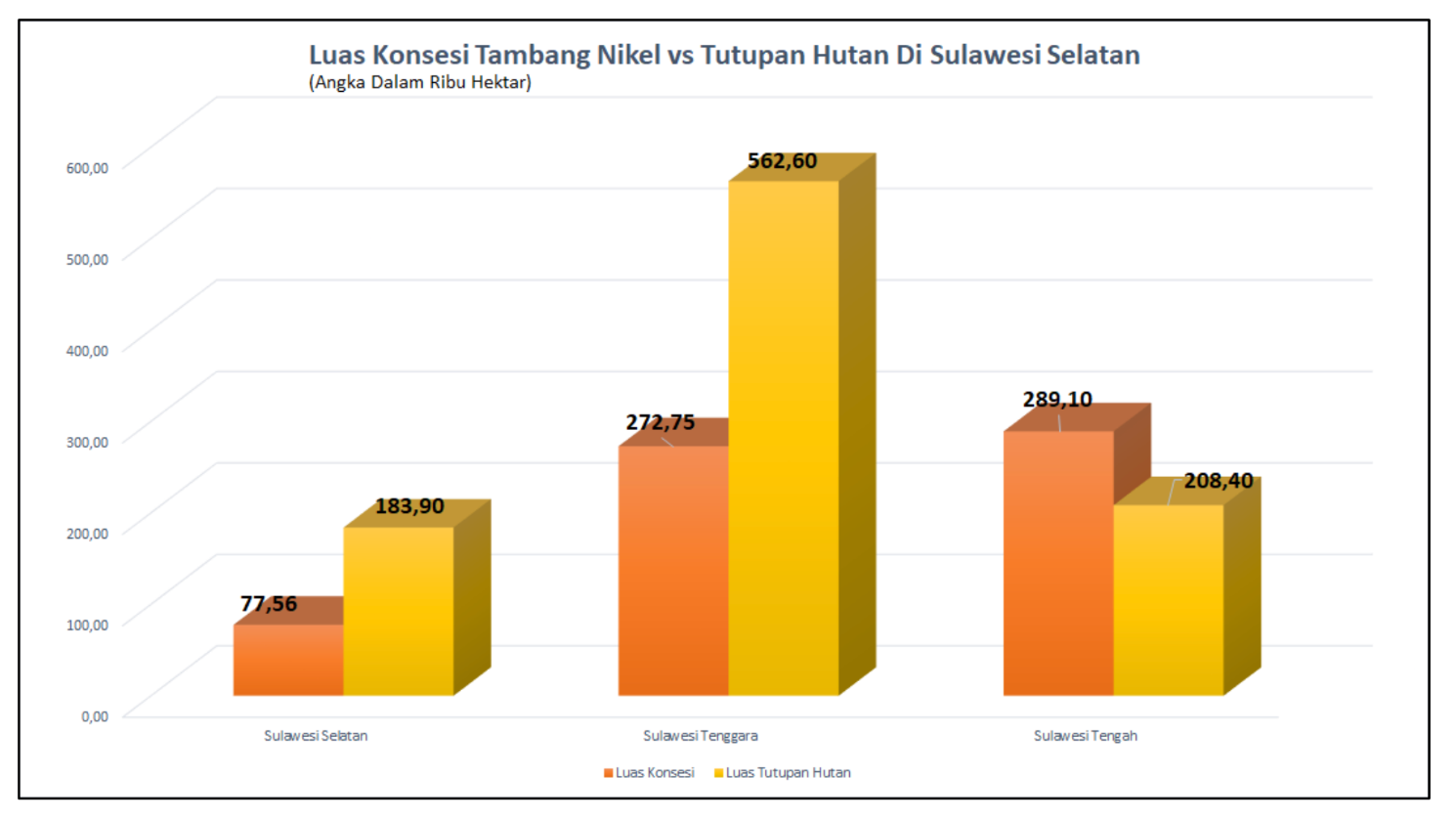
Comparison of Nickel Mining Concession Area and Forest Cover Area 2020 in South, Central and Southeast Sulawesi Provinces.
(Source: Catahu WALHI, 2021)
But behind those numbers lies another story, one that is often left untold.
Nickel mining expansion in Sulawesi and North Maluku has been linked to deforestation, water pollution, and conflicts with local communities. In industrial areas such as Morowali and Halmahera, reports from civil society organizations point to worsening air quality, environmental degradation, and drastic shifts in local livelihoods.
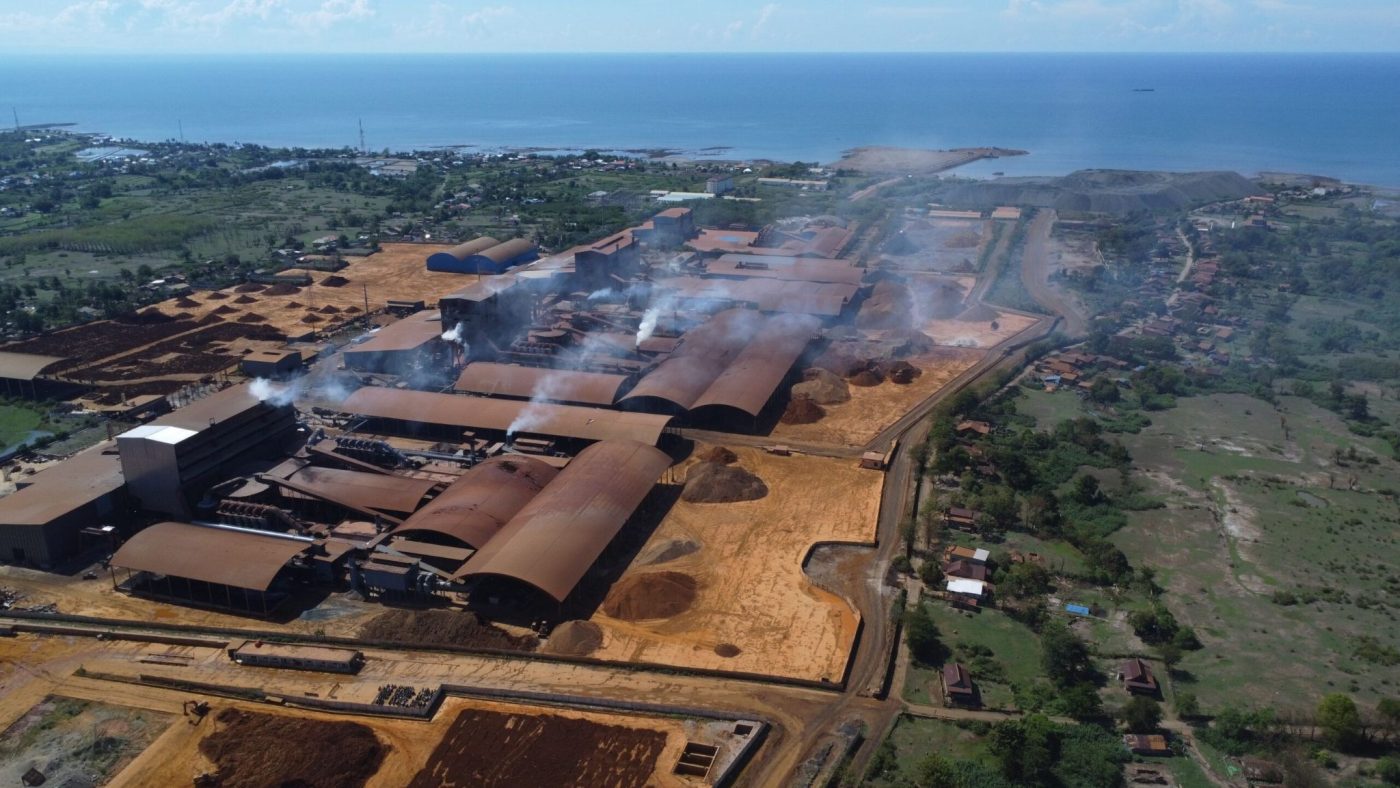
A view of industrial activity in the Bantaeng region.
(Source: Ekho Ardiyanto/Prohealth/2024)
Satellite analyses and NGO reports have shown significant forest loss around nickel concessions, while coal-fired power plants built to support smelters contribute to local air pollution.
Then there is the question of electricity. In Indonesia, most electricity is still generated by coal-fired power plants, the largest source of carbon emissions in the energy sector. Coal accounts for roughly 65-80% of Indonesia’s electricity mix, making it the dominant energy source.
So “clean” in one place may still mean “dirty” somewhere else. This raises a more fundamental question: are we truly transitioning to clean energy, or are we simply relocating the pollution?
We’ve seen these issues before in sectors like public transportation and the nickel industry.
But gradually, it’s becoming clear that similar patterns are also emerging in renewable energy projects, spaces we’ve long assumed to be clean and beyond critique.
Climate Solution or Policy Buzzword?
Globally, energy transition is positioned as the primary response to the climate crisis. Countries are racing to achieve net-zero emissions, expand renewable energy capacity, and reduce reliance on fossil fuels.
Alongside this, the concept of a just energy transition has gained traction, the idea that the shift to clean energy must be fair and inclusive, leaving no one behind.
But in practice, “just” is “just” or only instead of justice, often remains a buzzword.
In Southeast Asia, including Indonesia, energy policy is still largely technocratic. Focused on infrastructure, investment, and energy targets. Meanwhile, more complex issues, such as community participation, fair distribution of benefits, and protection of vulnerable groups are often left vague or unaddressed.
As a result, a wide gap emerges between policy ambition and reality on the ground.
At the foothills of Mount Gede Pangrango in West Java, that gap becomes tangible.
On paper, geothermal energy is clean—low-emission and stable. Indonesia holds one of the largest geothermal potentials in the world. Funding continues to flow, including through the Just Energy Transition Partnership (JETP), a USD 20 billion financing commitment announced during the 2022 G20 Summit.
Geothermal projects in the mountains of West Java.
Source: Data Geoportal ESDM, Ditjen EBTKE, Kementerian ESDM
But for residents of Sukatani, Cipendawa, and Sindangjaya villages, the energy transition looks very different.
A resident of Sukatani Village, Cianjur, hangs a banner opposing the geothermal project on one of his homes. Sukatani Village residents have also installed banners on several roads and several homes.
(Source: Project M/Rangga Firmansyah)
Information about geothermal exploration did not come through open dialogue, but through fragmented and limited channels. Public consultations were held but only involved a small number of people, far from representing the thousands who would be affected.
For local communities, this is not just about energy. It is about survival.
The mountain is their source of water, food, and livelihood, resources they have depended on for decades. Plans for drilling, which require significant water use and carry risks of hazardous waste, raise fears of water contamination and loss of agricultural land.
From there, resistance began to grow.
Communities formed alliances, built networks, and clearly stated their opposition. They are not rejecting clean energy as an idea. They are rejecting the way the transition is being carried out, without transparency, without meaningful participation, and without guarantees for their safety and livelihoods.
Similar stories can be found elsewhere.
In Dieng, Central Java, geothermal activities have exposed communities to toxic gases such as hydrogen sulfide (H₂S), causing respiratory problems and skin irritation.
In Sulawesi and North Maluku, nickel industrial expansion tied to the global clean energy supply chain has dramatically transformed ecological and social landscapes. Indonesia’s nickel supply is concentrated on the island of Sulawesi, where proven reserves account for 54.7% of Indonesia’s total. The second largest nickel reserve is the Maluku Islands, with 44.6%.
In Papua, hundreds of thousands of hectares of forest have been cleared for large-scale energy-related projects such as biofuel plantations, often at the expense of Indigenous land rights.
Large-scale land conversion for bioenergy and food estate projects has been widely criticized for threatening biodiversity and Indigenous territories.
The pattern is strikingly consistent: projects are justified in the name of a greater good, while the risks are borne by those living closest to them.
This is not unique to Indonesia. Across Southeast Asia, energy projects whether dams, geothermal plants, or “green” industrial zones, continue to trigger conflicts (RSIS, 2025). Communities lose land, Indigenous groups are displaced, and public consultations often become mere formalities.
Instead of resolving past injustices, the energy transition risks creating new ones.
And this reveals something deeper: the issue is not merely about poor implementation.
The energy transition is still being carried out with an old logic: top-down, elitist, and driven primarily by economic growth.
Green Transition or Greenwashing?
In many cases, justice in energy transition stops at the level of narrative.
The language sounds promising, just, inclusive, sustainable. But in reality, little changes. Some scholars refer to this as “greenwashing” or “diversity-washing”: when institutions claim inclusivity while continuing exclusionary practices.
Women and marginalized groups are “included,” but only symbolically. Communities are said to be “empowered,” yet have little real decision-making power. Projects are labeled “sustainable,” but still damage social and ecological systems.
If this continues, energy transition becomes nothing more than a shift in energy sources, without transforming the unjust systems behind them.
Another often overlooked issue is cost.
Energy transition requires massive investment, tens to hundreds of billions of dollars in Indonesia alone. But the more important question is not how much it costs, but who pays the price.
In many cases, those most affected are also the most vulnerable: coal workers losing jobs, local communities dependent on extractive industries, and households facing rising living costs.
Studies show that without proper policy design, energy transition can disproportionately impact low-income groups through job losses and energy price increases.
Without fair management, the transition risks deepening inequality rather than reducing it.
Too often, energy transition is framed as a technical issue: how many megawatts are installed, how much investment flows, and how fast net-zero targets can be achieved.
But it is not just a technical challenge.
Energy systems are deeply tied to power relations, economic structures, and access to resources. Without social and political transformation, the transition will not be truly transformative.
It will simply replace one energy source with another, while leaving inequality intact. So perhaps the question needs to shift. Not just how fast we can transition to clean energy, but how we ensure that the transition is just.
People protest against the unjust energy transition in Indonesia.
(Source: Antara Foto)
What Kind of Transition Do We Actually Need?
If we agree that energy transition is not just about technology, then the question shifts: how do we make it truly just?
- First, it has to be fair.
No group should be sacrificed in the process. Workers should not be abandoned, communities should not lose their living spaces, and there must be viable alternatives for those whose livelihoods are affected.
- Second, it has to be democratic.
Energy should not always come from the top. Community-based models, such as rooftop solar or energy cooperatives, can open space for people not just to consume energy, but to own and manage it.
- Third, it has to be rights-based.
People have the right to know, to be involved, and to say no. Principles like Free, Prior and Informed Consent should not be treated as a formality, but as a foundation.
- Fourth, it has to be honest.
Being “green” on paper is not enough. What matters is real impact: are emissions actually decreasing? Are practices genuinely fair?
- And finally, it must reduce inequality.
Energy transition should be an opportunity to expand access to energy, not just to serve industries or privileged groups, but to reach those who have long been left out.
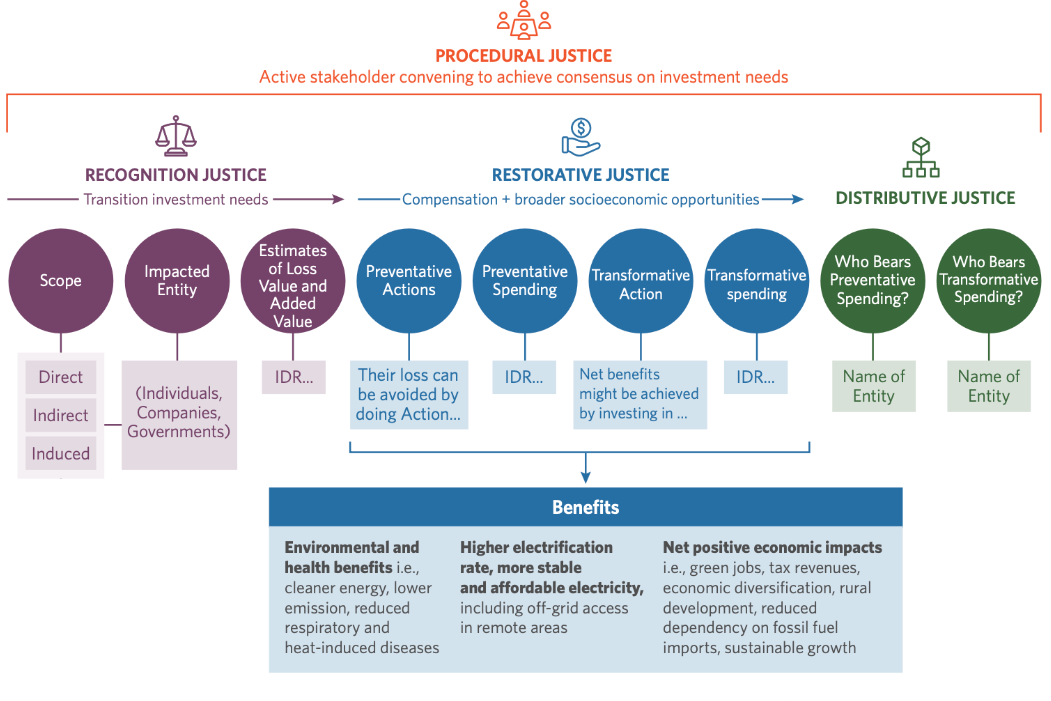
Case-specific Just Energy Transition Financing Framework.
(Source: by CPI Analysis, 2025)
And above all, it means honesty. Being “green” is not enough if it is only on paper. What matters is whether emissions are truly reduced, and whether the process is fair. In the end, energy transition is not just about changing fuel sources.
It is about choice.
Do we want a system that remains unequal, just greener?
Or one that is truly just, transparent, and inclusive?
It can begin with a few concrete steps:
- Advocate for energy justice principles: keep raising awareness that transition must be fair, not just green.
- Push for real implementation to government: demand transparency and accountability from governments and corporations.
- Support affected communities: amplify their voices and back community-led or decentralized energy initiatives.
The climate crisis demands urgency. But speed without justice can be dangerous.
Because if we are not careful, the energy future we are building today may replicate the same old patterns: inequality, exclusion, and conflict, just in a greener form.
And perhaps that is the most important question we need to answer now: a greener future, but will it also be a fairer one?
