

Jakarta, October 1, 2025 – During National Customer Day, several local and regional banks faced sharp criticism from civil society groups. The groups say the banks are hiding funding for polluting coal under the exciting name of “energy transition.” This dishonest practice was shown using a symbolic Trojan Horse during a street protest in Central Jakarta by a coalition of civil society organizations: Enter Nusantara, Market Forces, JATAM, and Trend Asia.
The protest specifically targeted banks that continue to fund the Harita Group’s nickel smelter project on Obi Island, North Maluku.
The “Trojan Horse” used by the activists symbolizes a deadly conflict: the nickel project, which is supposed to be for a clean energy future (like electric vehicle batteries), is actually powered by huge coal-fired power plants (PLTU).
From a distance, the project looks like innovation, but up close, it is just toxic emissions wrapped in the label of ‘energy transition.
The environmental impact is alarming. Harita Group’s operation already releases nearly 11 million tons of CO2 emissions per year, a number expected to jump to 22.45 million tons by 2028. This is a climate time bomb that directly prevents Indonesia from meeting its global emission reduction goals.
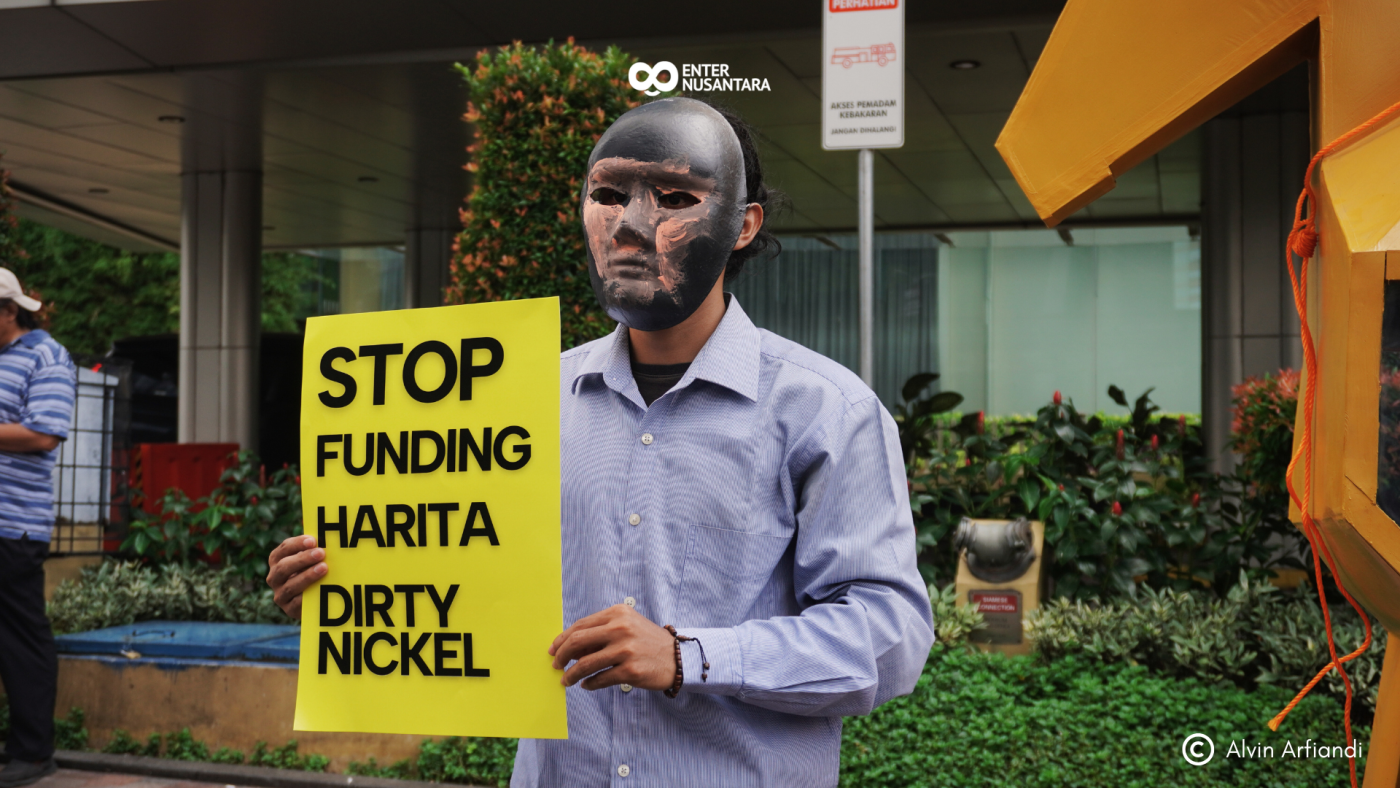
Ramadhan, the Coordinator of the Enter Nusantara Action, stressed that these banks are not just harming the climate, but also making the social justice crisis worse.
“While these banks make profits, the people of Obi Island must deal with countless losses: losing clean water, losing their land, and losing their sense of safety. They are the real victims of this fake ‘sustainable investment,'” Ramadhan said.
In a challenging discussion in front of Bank Mandiri’s office, the alliance handed over a “hell memo”—a detailed record of Bank Mandiri’s dirty history of funding coal power plants, including a recent Rp3.1 trillion fund injection for the Harita smelter. Their goal was clear: to pressure Bank Mandiri to stop funding destruction and switch immediately to a clean and fair energy future.
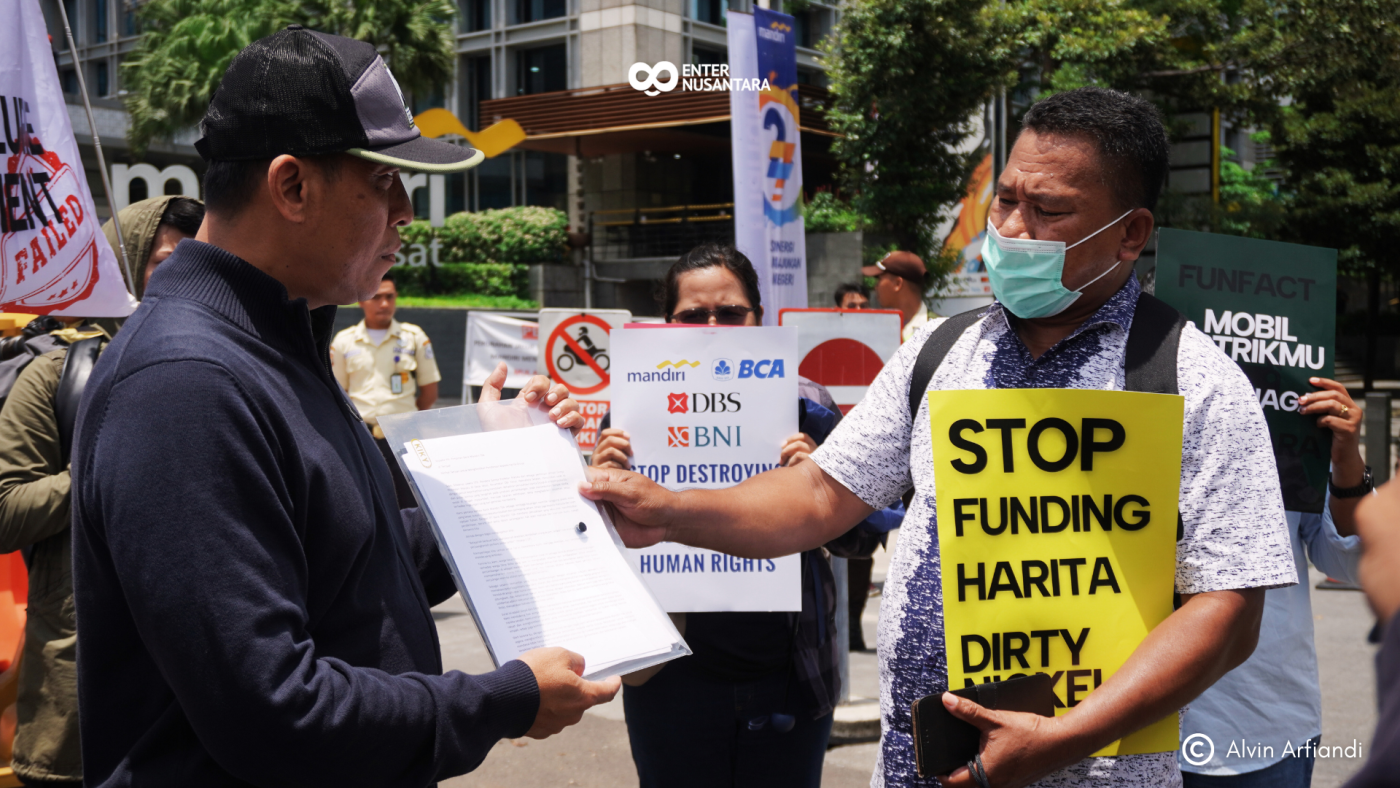
The protest ended with a moving moment: two priests brought from Obi Island personally delivered a report and an open letter to representatives of DBS Bank and Bank Mandiri. Their presence gave a voice to the harmed community.
Through this report, the civil society alliance demands firm action from six major banks: OCBC, UOB, DBS, Maybank, CIMB, and Mandiri. Their demand is to stop all financial support for Harita Group’s nickel smelter and end all dirty energy funding practices.
“These banks can no longer hide behind empty promises of ESG (Environmental, Social, and Governance). It is time for them to remove this Trojan Horse and truly fund a safe future for the people and the planet,” concluded the alliance.
