

Have you ever wondered why electricity is expected to be on 24/7—no questions asked–but we’re almost never invited to talk about where it actually comes from?We turn on the lights, blast the AC, charge our dying laptops, but rarely stop to ask: where does this energy we use every day actually come from, and who ends up paying the price for it?
That’s where the conversation about energy transition begins.
Chill and relax guys… this is not going to turn into an academic lecture or some elite policy talk. We can explain it in baby language.
Think of this as us sitting together, casually talking about our shared future, with energy right at the center of it.
So, What Is the Energy Transition?
In simple terms, the energy transition is the process of changing how humans produce and use energy. From old systems to new ones. From complicated and inefficient to simpler and smarter. From dirty to cleaner.
And here’s the important part: this is not new.
Over 200 years, humans have gone through multiple energy transitions throughout history. So this isn’t a sudden trend or modern-day FOMO, it’s part of a long journey of how humans survive, adapt, and build civilizations.
In the past, major shifts often came hand in hand with new technologies. Starting with the steam engine, oil lamps, and eventually electricity becoming part of everyday life. As the world moved from farming to industry, energy demand surged. Old ways of producing energy were no longer enough.
Today’s energy transition is also a major shift, but for a different reason. This time, it’s not just about finding energy that’s cheaper or more efficient, it’s about preventing the climate crisis from getting worse. If greenhouse gas emissions continue unchecked, the impacts are no longer theoretical; they’re already being felt.
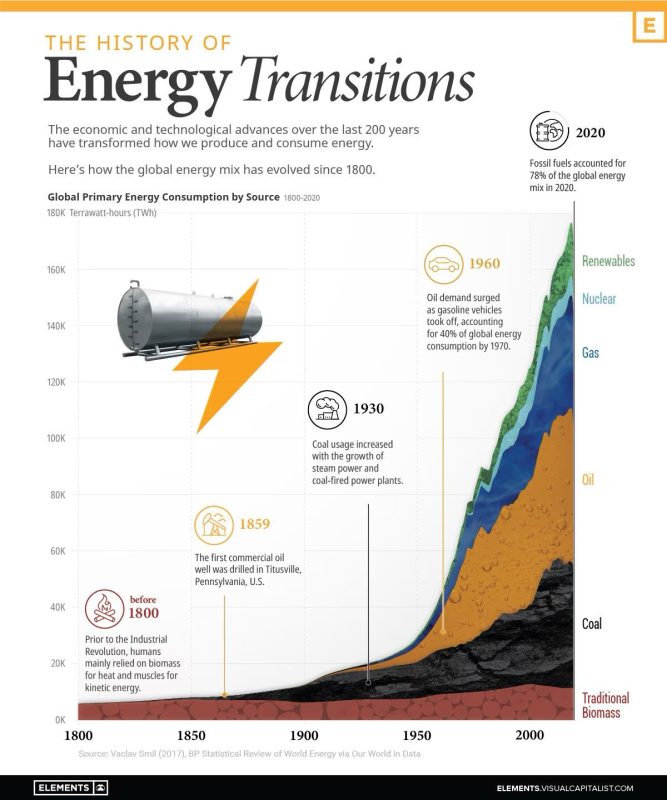
In short, this situation is clearly illustrated in the data visualization from the World Economic Forum below:
If we look back…
Prehistoric Times
Hundreds of thousands of years ago, human energy use was extremely basic. Think: muscle power and fire. Muscles were used for hunting, walking, and building shelters. Fire was used for cooking, staying warm, and protection. At this stage, energy wasn’t about comfort, it was about survival. Humans took only what they needed, because nature only gave what it could.
The Agricultural Era
Over time, humans got “smarter” and started borrowing energy from nature.
Wind moved sailing ships.
Water turned grain mills.
Animals helped plow fields. This was a major shift. Energy began to reshape how humans lived. Food production increased, trade expanded, and distances between people shrank. This was the first big energy transition: from human muscle to natural energy.Energy was no longer just about survival, it started shaping civilization itself.
The Industrial Revolution (The Turning Point )
The late 1700s changed everything.
Coal entered the scene, and with it, steam engines. Factories popped up, cities grew fast, and the world entered what we now call the Industrial Revolution.
Fossil energy allowed production on a massive scale, in much less time. Life became faster, more efficient, more crowded. Mass production became normal.
Back in the era of the steam engine, coal was everything. It’s no surprise, then, that coal’s share in the global energy mix surged, from just 1.7% in 1800 to 47.2% by 1900.
But there was a cost, one that took time to show up. Dirty air. Exploitative labor. Nature being extracted aggressively and endlessly.
This was the fastest and most brutal energy transition in human history.
The 20th Century
Around the 1900s, oil and gas took over.They became the favorites because they were easy to transport, energy-dense, and perfect for transportation and industry. Cars, airplanes, mass electricity, and modern industry all depended on them.However, coal hasn’t disappeared. In fact, it remains the backbone of global electricity generation and still accounts for more than one-third of the world’s total power production today.The result? Life sped up even more. Consumption skyrocketed. The world became deeply dependent on fossil fuels. Carbon emissions rose nonstop. The planet heated up. Extreme weather became more frequent. The climate crisis stopped being a scientist’s warning and started becoming real life.
The 21st Century
This is where we are now. For the first time in history, humans fully realize that the way we use energy is threatening our own survival. Today’s energy transition isn’t happening because we found some cool new energy source, it’s happening because the old ones have become too dangerous to keep. Over the past two decades, the share of renewable energy in the global energy mix has indeed grown, though slowly at first.
Between 2000 and 2010, it increased by just 1.1%. But the pace has picked up. From 2010 to 2020 alone, renewables gained another 3.5%. Under the Paris Agreement, the world committed to reaching net-zero emissions by 2050 as a global climate target. In practical terms, this means that within less than 30 years, fossil fuels need to be phased out while renewable energy must scale up rapidly.
The combustion of oil, gas, and coal has enabled much higher living standards through radical technological and scientific innovation over the last 150 years. However, for decades, scientists have shown clear evidence that carbon emissions from fossil fuels endanger our species and many others.
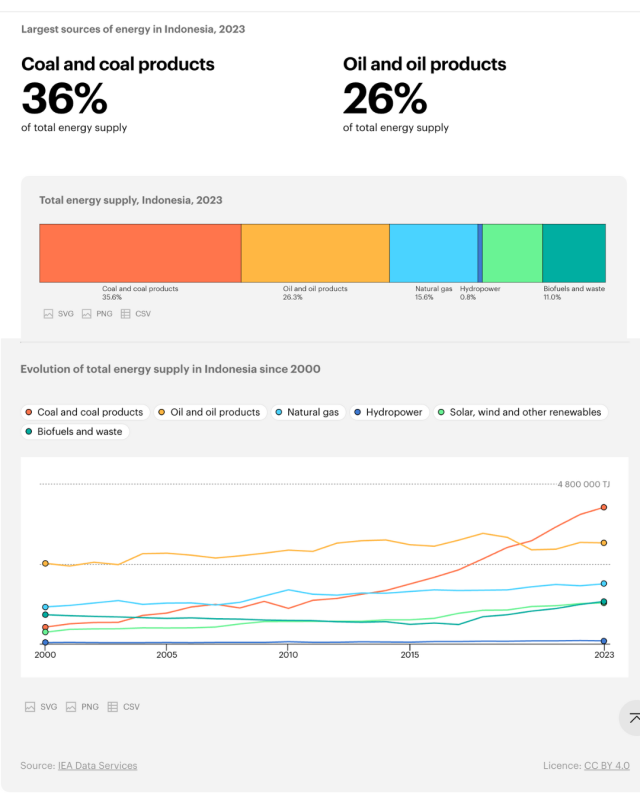
The energy transition means shifting from fossil-based systems to cleaner sources like solar, wind, water, and geothermal energy. But this isn’t just about swapping technologies.
It’s about changing habits, economies, and power relations. About who controls energy.
Who benefits from it. And who has been carrying the burden all along.
In the past, energy transitions happened with very few questions. Today, the questions are louder than ever. Will clean energy actually be fair? Will young people, local communities, and affected groups be involved? Or are we just moving the problem from one source to another?
That’s why today’s energy transition feels messy and full of debate. Because this isn’t just about electricity or power plants, it’s about the future of human life. About the air we breathe, the jobs available to us, and the planet we’ll be living on for decades to come.
So if someone asks, “What is the energy transition, bro?”
The answer is simple: It’s humanity’s attempt to fix its relationship with energy, before that relationship destroys us completely.
Now that you know what the energy transition is, have you ever wondered what kinds of energy Indonesia actually uses today?
And more importantly, do we have renewable energy potential we can truly rely on?
Let’s continue the conversation in the next article.
Read more here!
Any suggestions for Bilik Belajar? Write down in comments section!
